Table of Contents
Growing healthy, productive vegetables starts with understanding one of the most fundamental aspects of gardening: soil pH. Whether you’re a seasoned gardener or just beginning your vegetable gardening journey, the acidity or alkalinity of your soil directly impacts nutrient availability, plant health, and ultimately, your harvest success. This comprehensive guide explores everything you need to know about soil pH for vegetables, from testing and adjustment to specific requirements for different crops.
Understanding Soil pH: The Basics
Soil pH measures the concentration of hydrogen ions in your garden soil, determining whether it’s acidic, neutral, or alkaline. The pH scale ranges from 0 to 14, with 7 being neutral. Readings below 7 indicate acidic soil, while readings above 7 indicate alkaline soil. For most vegetables, a slightly acidic to neutral pH between 6.0 and 7.0 is ideal, though some crops prefer specific ranges.
The importance of maintaining proper soil pH cannot be overstated. When soil pH is outside the optimal range for specific vegetables, essential nutrients become “locked up” or unavailable to plant roots, even if those nutrients are present in the soil. This condition, known as nutrient immobilization, leads to nutrient deficiencies and poor plant performance despite adequate nutrient content in the soil.
The Science Behind Soil pH and Nutrient Availability
Soil pH acts as a gatekeeper for nutrient availability. Different nutrients become available to plants at different pH levels. Nitrogen, phosphorus, and potassium are generally most available in the 6.0 to 7.0 range. Micronutrients like iron, manganese, and zinc become more available in acidic soils, while calcium and magnesium availability increases in alkaline conditions.
When soil pH drops too low (becomes too acidic), aluminum and manganese can reach toxic levels. Conversely, overly alkaline soil can lead to iron chlorosis, a yellowing of leaves due to iron unavailability. Understanding these dynamics is crucial for managing soil pH for vegetables effectively.
Testing Your Soil pH: Methods and Accuracy
Home Testing Kits
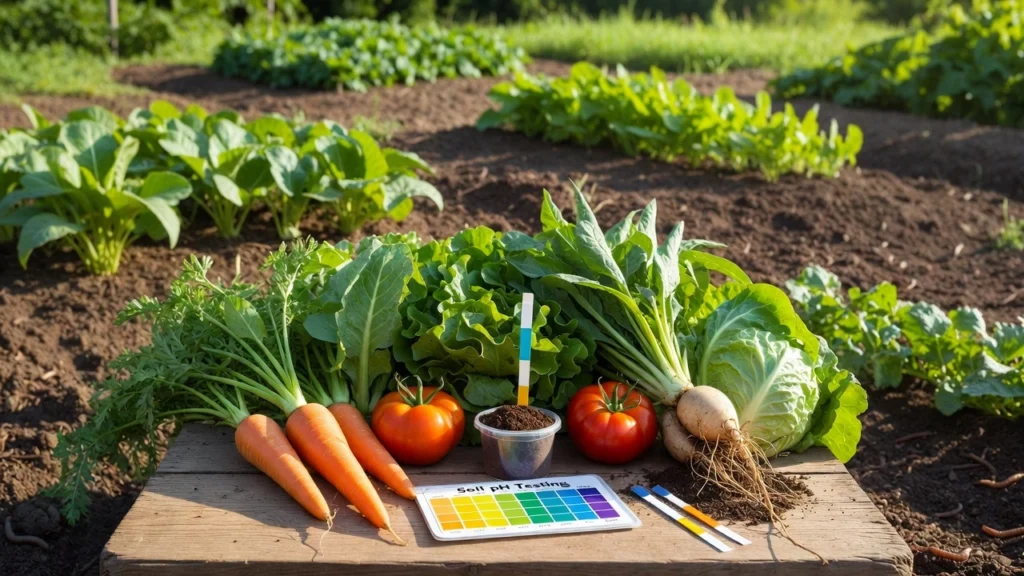
The most accessible way to test soil pH is using commercial home testing kits available at garden centers. These kits typically cost between $10 and $30 and provide reasonably accurate results. Most home kits use a color-matching system or electronic pH meter. While convenient, these methods are less precise than professional laboratory testing.
Professional Soil Testing
For the most accurate assessment of your garden soil, submit samples to your local agricultural extension office or a professional soil testing laboratory. These institutions provide detailed soil analysis including pH, nutrient levels, organic matter content, and specific recommendations for your region and crops. The cost ranges from $20 to $50 per sample, and results typically arrive within one to two weeks.
Digital pH Meters
Handheld digital pH meters offer quick readings and decent accuracy when properly calibrated. These devices cost between $20 and $100 and work by inserting the probe directly into moist soil. For best results, calibrate your meter before each use and take multiple readings across your garden, as pH can vary significantly in different areas.
Soil pH Requirements for Popular Vegetables
Neutral to Slightly Acidic Preferences (6.0–7.0)
Most common vegetables thrive in slightly acidic to neutral soil conditions. Tomatoes, peppers, lettuce, spinach, broccoli, cabbage, and cauliflower all perform well in this range. These crops benefit from the optimal nutrient availability provided by pH levels between 6.0 and 7.0.
Beans and peas represent another important group preferring neutral soil. Legumes form symbiotic relationships with nitrogen-fixing bacteria, and these relationships function optimally near neutral pH levels. When soil becomes too acidic, these beneficial microorganisms struggle to establish effective associations with legume roots.
Acid-Loving Vegetables (5.5–6.5)
Certain vegetables prefer slightly more acidic conditions. Potatoes grow well in the 5.5 to 6.5 range and actually show reduced susceptibility to scab disease in more acidic soil. Blueberries, though technically fruits, require extremely acidic soil between 4.5 and 5.5, making them distinct from most vegetables.
Garlic, onions, and other alliums generally tolerate a wider pH range but prefer the 6.0 to 7.5 spectrum. However, slight acidity doesn’t harm these crops, and many gardeners successfully grow them across broader pH ranges.
Alkaline-Tolerant Vegetables (7.0–8.0)
Some vegetables demonstrate greater tolerance for alkaline conditions. Asparagus performs well in slightly alkaline soil up to pH 8.0. Brassicas like kale and Brussels sprouts also tolerate alkaline soil better than many other vegetables, though they still prefer slightly acidic conditions.
Root vegetables like carrots, parsnips, and beets prefer neutral to slightly alkaline soil, though they’re adaptable across a broader range than acid-loving plants. Understanding these preferences allows gardeners to optimize conditions for their specific crop selections.
Adjusting Soil pH: Lowering Acidic Soil
Using Lime to Raise pH
When soil is too acidic, adding limestone (calcium carbonate) or dolomitic limestone raises pH and adds beneficial calcium and magnesium. Ground limestone works slowly, requiring several months to fully integrate and raise pH. For faster results, hydrated lime (calcium hydroxide) raises pH more quickly but risks over-correction if not applied carefully.
Application rates depend on current pH, soil texture, and desired pH. Heavy clay soils require more lime than sandy soils because clay particles hold more H+ ions. Typically, applying 50 to 100 pounds of limestone per 1,000 square feet raises pH by approximately one unit, though local extension services can provide specific recommendations.
Wood Ash and Other Alkaline Amendments
Wood ash from hardwood fires contains calcium carbonate and can raise pH, providing approximately 2.5 times the alkalinity of limestone. However, wood ash should be used cautiously, as excessive application leads to excessive potassium accumulation. Apply no more than 40 pounds per 1,000 square feet annually.
Crushed seashells and calcitic limestone provide slower, more gradual pH elevation. These options suit gardeners preferring gentle, long-term adjustments over dramatic changes.
Adjusting Soil pH: Raising Alkaline Soil
Sulfur Application for pH Reduction
When soil is too alkaline, elemental sulfur lowers pH effectively. Sulfur works through microbial oxidation, converting to sulfuric acid and gradually reducing pH over several months to one year. Application rates typically range from 25 to 50 pounds per 1,000 square feet to lower pH by one unit, depending on soil type and current alkalinity.
Sandy soils require less sulfur than clay soils due to their lower buffering capacity. Spring application allows time for microbial activity and sulfur oxidation before the growing season begins.
Acidifying Amendments and Organic Matter
Peat moss naturally acidifies soil and is commonly used to lower pH, though environmental concerns about peat harvesting have made gardeners seek alternatives. Coconut coir provides similar acidifying properties with less environmental impact. Apply these amendments generously, incorporating 2 to 3 inches into the top 6 to 8 inches of soil.
Iron sulfate (copperas) provides a faster pH reduction than elemental sulfur, typically showing results within weeks rather than months. However, it’s less effective in sandy soils and can cost more than sulfur alternatives.
Maintaining Stable Soil pH Over Time
Regular Organic Matter Addition
Incorporating compost, aged manure, and other organic materials buffers soil pH, preventing dramatic fluctuations. Organic matter acts like a sponge, holding onto hydrogen and hydroxide ions and preventing sudden pH swings. Annually adding 1 to 2 inches of quality compost maintains stable conditions while improving soil structure and nutrient content.
Monitoring and Periodic Testing
Don’t test soil pH once and forget about it. Retest every two to three years, or annually if you’ve recently made significant amendments. Certain gardening practices gradually shift soil pH—frequent nitrogen fertilizer applications acidify soil, while crop residue decomposition and lime amendments raise pH.
For vegetable soil pH management, many experienced gardeners test in fall after harvest, allowing time to implement corrections before spring planting.
Crop Rotation and pH Management
Strategic crop rotation influences long-term soil pH. Legumes tend to raise soil pH slightly, while brassicas and grains may acidify soil. Rotating crops based on pH preferences prevents soil from drifting too far from optimal ranges and reduces the need for frequent amendments.
Common Soil pH Mistakes and How to Avoid Them
Over-Correcting Soil pH
Gardeners often over-correct pH, applying excessive lime or sulfur and creating new problems. Start with small applications, wait several months, retest, and adjust as needed. Dramatic pH swings stress plants and disrupt microbial communities that maintain soil health.
Ignoring Regional Soil Characteristics
Regional rainfall patterns significantly influence native soil pH. Areas with high precipitation naturally develop acidic soils, while arid regions tend toward alkalinity. Fighting against regional tendencies requires ongoing maintenance, whereas working with natural soil conditions reduces long-term amendment needs.
Neglecting Microbial Activity
Beneficial soil microorganisms drive nutrient cycling and pH buffering. Using excessive chemical amendments, tillage, and pesticides damages these communities. Maintaining soil health through organic matter addition and minimizing disturbance supports pH stability naturally.
Regional Considerations for Vegetable Soil pH
Eastern United States
High precipitation in eastern regions creates naturally acidic soils, particularly in forested areas. Gardeners typically need to raise pH with lime applications. The frequency of amendment depends on rainfall intensity—humid southern regions may need pH management more frequently than drier regions.
Western and Southwestern Regions
Low precipitation in western areas creates naturally alkaline soils, sometimes quite extreme in arid zones. Western gardeners often need sulfur applications to lower pH, particularly in newly developed areas where native soil hasn’t been heavily amended. Building organic matter through compost incorporation gradually improves conditions.
Coastal Areas
Coastal regions present unique challenges due to salt spray and salt accumulation in soil. Excessive salt interferes with pH management and nutrient uptake. These areas benefit from regular soil testing and careful amendment application, along with supplemental irrigation to leach excess salts.
Advanced Soil pH Management Strategies
Buffer Capacity and Soil Texture
Understanding buffer capacity—the soil’s resistance to pH change—helps predict how much amendment your soil requires. Clay soils have high buffer capacity and resist pH change, requiring more amendment than sandy soils with low buffer capacity. Loamy soils fall between these extremes.
Knowing your soil texture allows better prediction of amendment effectiveness. This expertise develops through repeated testing and observation or by consulting local extension resources familiar with regional soil types.
Micronutrient Considerations
While achieving correct pH for macronutrient availability, also consider micronutrient dynamics. Extremely acidic soils risk manganese and aluminum toxicity, while very alkaline soils cause iron and zinc deficiencies. Balanced pH management prevents these extremes and maintains micronutrient availability.
Companion Planting and pH
Some experienced gardeners use companion planting to manage soil chemistry. Nitrogen-fixing legumes naturally improve soil pH for sensitive crops. Rotating legumes with other vegetables leverages this natural pH modification without requiring chemical amendments.
Key Takeaways
- Optimal Range: Most vegetables thrive with soil pH between 6.0 and 7.0, though specific crops have individual preferences.
- Testing Importance: Professional soil testing provides the most accurate pH assessment and tailored recommendations for your specific situation.
- Amendment Options: Use limestone to raise pH in acidic soils and sulfur or acidifying amendments to lower pH in alkaline soils.
- Gradual Adjustment: Make small pH corrections over time rather than dramatic changes that stress plants and disrupt soil biology.
- Organic Matter: Regular compost incorporation buffers pH naturally while improving overall soil health and structure.
- Regional Adaptation: Work with regional soil tendencies rather than against them to reduce long-term amendment requirements.
Monitoring: Retest soil pH every two to three years to track changes and maintain optimal conditions for your crops.
Frequently Asked Questions About Soil pH for Vegetables
Q: How often should I test my vegetable garden’s soil pH?
A: Test soil pH every two to three years, or annually if you’ve recently made significant amendments or notice plant health problems. Many gardeners test in fall after harvest, allowing time to implement corrections before spring planting. If you’re new to gardening or working with previously untested soil, start with annual testing until you establish baseline conditions and understand your soil’s natural tendencies.
Q: Can I use vinegar or baking soda to adjust soil pH?
A: While vinegar (acidic) and baking soda (alkaline) can temporarily affect soil pH in small areas, they’re not practical for large-scale vegetable gardens. These household products lack the staying power of commercial amendments like limestone and sulfur. They also won’t address the underlying soil chemistry that influences pH buffering. For reliable results, use established soil amendments and follow extension service recommendations for your soil type and target pH.
Q: What’s the difference between calcitic and dolomitic limestone?
A: Calcitic limestone contains calcium carbonate and raises pH while adding calcium. Dolomitic limestone contains calcium and magnesium carbonates, raising pH while supplementing both elements. Choose dolomitic limestone if your soil tests deficient in magnesium. Calcitic limestone works when magnesium levels are adequate. Both products work similarly for pH adjustment; the difference lies in mineral content.
Q: Why do some vegetables prefer acidic soil while others prefer alkaline soil?
A: This preference relates to nutrient availability at different pH levels and the plant’s evolutionary adaptation to specific growing regions. Potatoes, for example, evolved in acidic soils of South America and maintain genes optimizing nutrient uptake in that chemical environment. Some crops also show reduced disease susceptibility in specific pH ranges—potatoes resist scab disease better in acidic soils. Understanding these preferences comes from observing where these crops naturally thrive and studying their nutrient requirements.
Q: Can I safely use both lime and sulfur in the same garden?
A: Yes, you can use lime and sulfur in the same garden, but apply them to different areas and never simultaneously to the same soil. Some gardeners maintain acidic beds for acid-loving crops using sulfur, while keeping other beds neutral to slightly alkaline using lime applications. Space these amended beds several feet apart to prevent cross-neutralization. Test individual beds separately to monitor each area’s pH independently.
Q: How long does it take to see results after adjusting soil pH?
A: Response time depends on the amendment used. Hydrated lime raises pH within weeks, while ground limestone requires two to three months. Elemental sulfur and iron sulfate require several months to one year, working through microbial oxidation. Don’t expect immediate results—plan pH corrections during off-season periods or before planting. Always allow time for amendments to integrate before planting sensitive crops.
Conclusion: Creating the Perfect Soil Environment for Your Vegetables
Mastering soil pH for vegetables represents a fundamental investment in gardening success. By understanding your soil’s current pH, identifying specific crop requirements, and implementing appropriate amendments, you create an environment where vegetables thrive naturally. The combination of accurate testing, knowledge-based adjustment, and regular organic matter incorporation builds soil that supports vigorous plant growth, abundant nutrient availability, and healthy microbial communities.
Remember that achieving optimal soil pH isn’t a one-time project but an ongoing aspect of garden management. Regular testing reveals how your practices influence soil chemistry over time. Whether you’re dealing with naturally acidic eastern soils requiring lime applications or western alkaline soils needing sulfur amendments, your regional context and specific crop choices guide appropriate management strategies.
Start with professional soil testing to establish baseline conditions, then implement gradual corrections based on extension service recommendations. Learn from vegetable soil pH research and local gardening experiences. As you develop comfort with soil management, you’ll recognize visual signs of pH problems and respond proactively before they impact your harvest.
The gardeners who produce the healthiest, most productive vegetables month after month share one common practice: they understand and actively manage their soil pH. By implementing the strategies outlined in this guide, you join their ranks, creating growing conditions that support exceptional vegetable production for years to come.