Table of Contents
The Complete Guide to Harvesting Tomatoes: Expert Tips for Maximum Yield and Flavor
There’s nothing quite like the satisfaction of harvesting sun-ripened tomatoes from your garden. Whether you’re a seasoned gardener or a beginner with a few plants on your patio, knowing when and how to harvest tomatoes properly can significantly impact your yield, flavor profile, and overall gardening success. This comprehensive guide will walk you through everything you need to know about harvesting tomatoes, from recognizing ripeness indicators to storing your harvest for maximum longevity.
Tomato harvesting is both an art and a science. It requires understanding plant physiology, recognizing subtle ripeness cues, and employing proper techniques to avoid damaging your plants. The difference between harvesting at the right moment versus too early or too late can mean the difference between mediocre homegrown tomatoes and exceptional produce that rivals farmers’ market quality.
Understanding Tomato Ripeness: The Foundation of Proper Harvesting
Before you can harvest tomatoes effectively, you need to understand what ripeness actually looks like. Tomato ripeness isn’t solely determined by color—it involves a complex interplay of factors including size, texture, smell, and internal development.
Visual Indicators of Ripeness
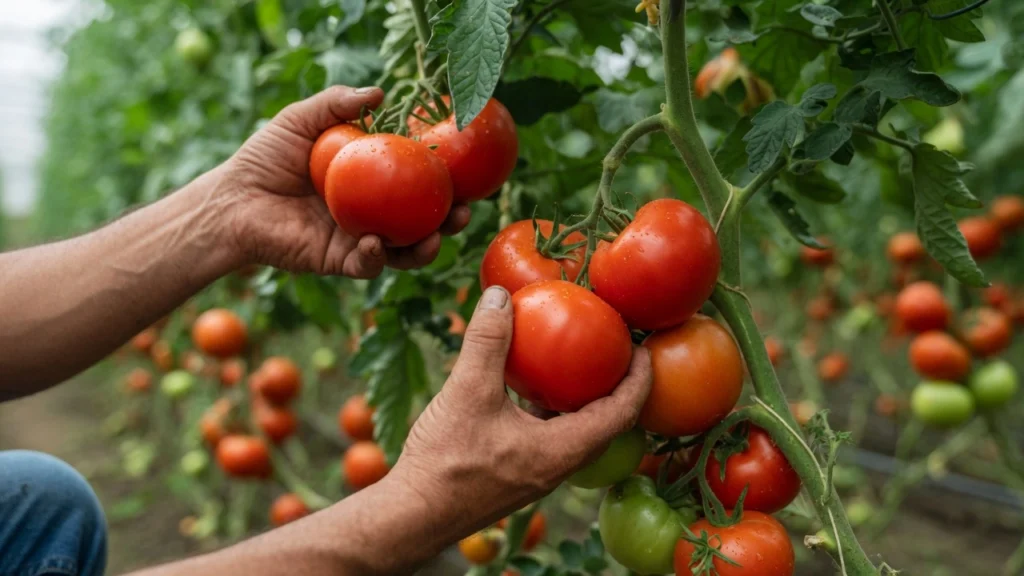
The most obvious indicator of tomato ripeness is color. For most red tomato varieties, a fully ripe tomato should display a deep, uniform red color from bottom to top. However, ripeness varies depending on your tomato variety. Cherry tomatoes might be perfectly ripe at a slightly lighter shade of red, while beefsteak tomatoes often show a more burgundy tone when fully mature.
The color change process typically occurs over several days. You’ll notice the tomato transitioning from green to a whitish or yellowish hue (called the “breaker stage”), then progressively reddening. This visual progression is your signal that harvest time is approaching.
Beyond color, examine the texture of the skin. A ripe tomato should feel slightly yielding when gently squeezed—firm but not hard, and definitely not soft or mushy. The skin should appear smooth and glossy rather than dull. If you notice any wrinkles or soft spots, the tomato is overripe and best used immediately or composted.
The Touch Test
Experienced gardeners often rely on the touch test to determine ripeness. Gently hold the tomato in your palm and apply light pressure with your fingers. A ripe tomato should feel substantial but give slightly under pressure, indicating that the interior is juicy and flavorful. A tomato that feels rock-hard isn’t quite ready, while one that feels mushy or squishy is overripe.
The Aroma Assessment
One of the most reliable indicators of ripeness is aroma. Bring your nose close to the tomato, particularly near the base where it connects to the stem. A ripe tomato emits a distinct, pleasant tomato fragrance—sweet, earthy, and unmistakable. If the tomato has little to no smell, it’s likely still developing and not yet at peak ripeness. This olfactory indicator is particularly useful because it correlates strongly with sugar content and flavor development.
Optimal Timing for Tomato Harvesting
When to harvest tomatoes depends on several factors, including your intended use, climate conditions, and storage plans. Understanding these timing considerations will help you maximize both your harvest quality and quantity.
Full Ripeness Harvesting
For the most flavorful tomatoes, harvest them when they’re fully ripe—displaying complete color development and passing all the tests mentioned above. This timing is ideal for fresh eating, slicing for sandwiches, or making fresh salsa. Fully ripe tomatoes picked directly from the plant contain maximum sugar content, lycopene, and flavor compounds.
Full ripeness harvesting typically occurs mid-to-late summer in most climates, though the exact timing depends on when you planted your seedlings and your local growing season length.
The Breaker Stage: Harvesting Early
If you’re concerned about frost approaching or want to prevent cracking, consider harvesting at the breaker stage. This is when the tomato first shows color change—appearing whitish, yellowish, or showing the first hints of red. Tomatoes harvested at this stage will continue ripening off the vine, providing several advantages: they’re less likely to crack, they may develop more complex flavors, and they’re easier to transport without damage.
Research from university horticulture programs indicates that tomatoes harvested at the breaker stage ripen to nearly identical flavor and nutritional profiles as vine-ripened fruit when stored at room temperature (68-72°F).
Pink Stage Harvesting
The pink stage—when the tomato is approximately 25-50% colored—represents another viable harvesting window. Tomatoes at this stage will continue ripening off the vine and are significantly less prone to damage. This approach works particularly well for gardeners in areas with challenging weather, pest pressures, or those who want to extend their harvest window.
Essential Techniques for Harvesting Tomatoes
How you harvest tomatoes is just as important as when. Using improper techniques can damage your plants, reduce future yields, and harm the fruit.
The Gentle Twist and Lift Method
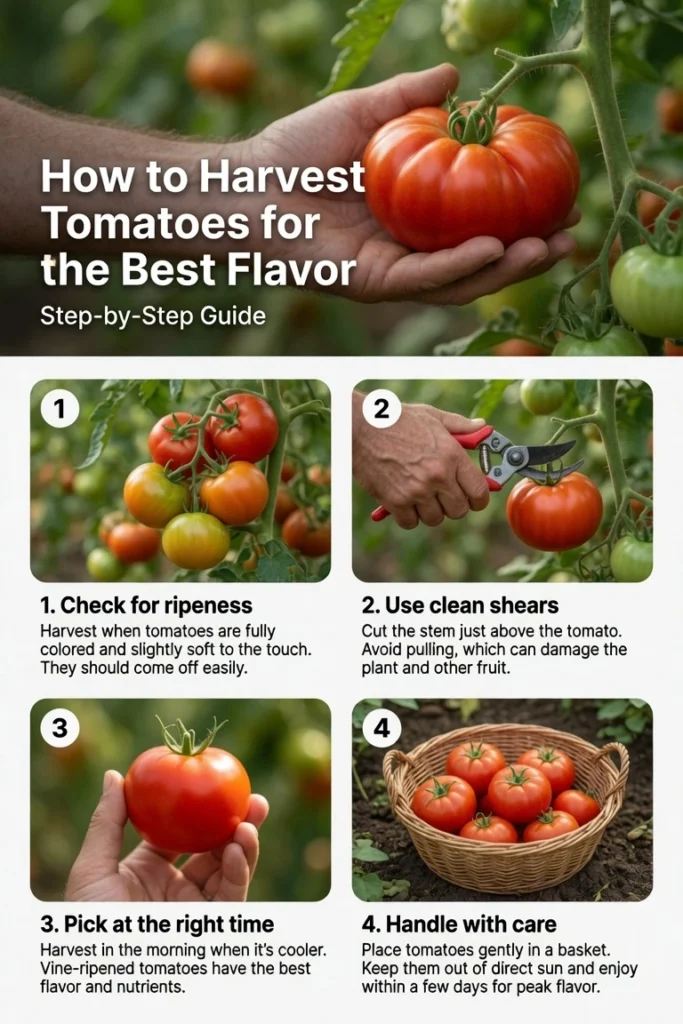
The most common and effective harvesting technique is the gentle twist and lift. Hold the tomato firmly but gently in one hand while supporting the vine with your other hand. Then, slowly twist the tomato while applying gentle upward pressure. The tomato should separate from the stem cleanly with minimal effort. If significant resistance occurs, the tomato likely isn’t ready—wait another day or two before attempting harvest.
This method minimizes stress on the plant and reduces the likelihood of tearing branches or accidentally breaking lower fruit on the vine.
Using Harvest Pruners
For tomatoes that don’t release easily, or if you have arthritis or hand strength limitations, using clean harvest pruners or scissors is an excellent alternative. Cut the stem approximately one-quarter inch above the tomato’s crown. This technique is particularly useful for determinate varieties (bush tomatoes) where multiple fruits are clustered closely together.
Always sterilize your pruners between plants by wiping with a cloth dampened in a 10% bleach solution. This simple step prevents spreading plant diseases like early blight or late blight between plants.
Timing Your Harvest During the Day
Harvest tomatoes during the cooler parts of the day—early morning after dew has dried or late afternoon before the hottest part of the day. This timing reduces plant stress and helps tomatoes stay fresher longer. Avoid harvesting during peak afternoon heat when plants are stressed and fruit is warmer. Warm fruit is more susceptible to bruising and deteriorates more quickly.
Handling and Transport
After harvesting, treat tomatoes gently. Use shallow containers lined with paper towels or cloth rather than stacking them in deep buckets. This prevents bruising from compression. Store them in a cool location away from direct sunlight during transport. Never refrigerate fresh tomatoes immediately after harvest, as this damages the flavor compounds and can halt ripening if any tomatoes aren’t completely ripe.
Managing Your Harvesting Schedule
An effective harvest schedule keeps your tomato plants productive throughout the growing season and maximizes your total yield.
Staggered Harvesting for Continuous Supply
Rather than waiting until many tomatoes are perfectly ripe simultaneously, adopt a staggered harvesting approach. Pick ripe tomatoes every 2-3 days throughout the season. This practice offers multiple benefits: it encourages the plant to continue flowering and producing new fruit, prevents overripeness and splitting, and provides you with a steady supply of fresh tomatoes rather than a overwhelming glut.
End-of-Season Harvesting
As frost approaches or your growing season ends, maximize your harvest by picking all remaining tomatoes, even those that aren’t fully ripe. Green tomatoes harvested in fall can ripen indoors over several weeks. Spread them in a single layer on newspaper in a warm (65-75°F), dark location. Check them every few days, removing any that show signs of mold or deterioration. This end-of-season strategy can extend your harvest by 2-3 weeks.
Variety-Specific Harvesting Considerations
Different tomato varieties have distinct characteristics affecting optimal harvest timing and technique.
Cherry and Grape Tomatoes
These small varieties produce prolifically and can be harvested individually or in entire clusters. Their thin skins make them prone to splitting if left too long on the vine in humid conditions. Harvest when they display their varietal color—deep red, yellow, or orange depending on the cultivar. Cherry tomatoes often ripen faster than larger varieties and benefit from more frequent harvesting.
Beefsteak and Large Slicing Tomatoes
Large tomato varieties like ‘Brandywine,’ ‘Mortgage Lifter,’ and ‘Cherokee Purple’ require patience. These tomatoes are indeterminate varieties that continue producing throughout the season. Harvest when fully ripe for optimal flavor and nutrient density. These varieties are particularly susceptible to cracking if harvested when wet, so wait until the fruit and surrounding foliage are completely dry.
Heirloom Tomatoes
Heirloom varieties are prized for their superior flavor and should be harvested fully ripe for the best taste experience. Many heirloom tomatoes display color variations and imperfect shapes—this is completely normal. Wait for deep color development and the characteristic aroma before harvesting heirlooms, as these factors indicate peak flavor development.
Determinate Paste Tomatoes
Processing tomatoes like ‘San Marzano’ and ‘Roma’ often ripen in waves, with many fruits reaching peak ripeness simultaneously. These varieties are ideal for harvesting as a group for sauce-making or canning projects. Harvest when uniformly colored and completely ripe for maximum yield and best sauce consistency.
Addressing Common Harvesting Challenges
Even experienced gardeners encounter harvesting challenges. Understanding how to address them ensures maximum success.
Tomato Cracking and Splitting
Cracks typically develop when tomatoes experience irregular watering—alternating between dry periods and heavy rains. To minimize cracking, maintain consistent soil moisture with deep, regular watering rather than frequent shallow watering. Additionally, harvest tomatoes promptly once they’re fully ripe. Tomatoes left on the vine past peak ripeness are significantly more prone to splitting.
Certain varieties are naturally more crack-resistant. If cracking is persistent in your garden, consider planting ‘Sungold,’ ‘Fourth of July,’ or other crack-resistant cultivars in future seasons.
Ripening Delays in Cool Weather
In regions with cool summers, tomato ripening can slow dramatically. If temperatures consistently remain below 68°F, ripening essentially stalls. Consider using row covers or black plastic to warm the soil and surrounding microclimate. Alternatively, prune excessive foliage to allow more sunlight to reach developing fruit, or harvest slightly early and ripen fruit indoors.
Overripeness and Fruit Drop
If you’ve been away or neglected your tomato plants, you might return to find overripe fruit or fallen tomatoes. Tomatoes that fall to the ground often sustain damage but may still be usable if not completely crushed. Check them quickly, as damaged fruit deteriorates rapidly. Use damaged or overripe tomatoes for sauce, salsa, or juice rather than storing them whole.
Green Tomato Blight or Disease
If disease affects your plants, harvest all remaining tomatoes—even green ones—to prevent disease spread. This “preventative harvest” allows you to save as much fruit as possible while also limiting disease transmission to the rest of your garden.
Post-Harvest Storage and Ripening
Proper post-harvest handling extends your harvest’s lifespan and maintains quality.
Room Temperature Ripening
For tomatoes harvested at the breaker or pink stage, ripen them at room temperature (68-72°F) in a location away from direct sunlight. Arrange them in a single layer on newspaper or in a paper bag. Tomatoes require ethylene gas to ripen, and enclosing them partially (leaving the bag open) concentrates this gas and speeds ripening. Expect full color development within 5-10 days depending on initial ripeness stage.
Refrigeration Guidelines
Once tomatoes are fully ripe and you’re ready to store them, room temperature storage remains superior to refrigeration for up to one week, as cold damages flavor compounds and texture. If you must refrigerate, store tomatoes for no longer than 3-4 days and remove them 30 minutes before eating to allow flavor compounds to re-activate.
Extended Storage Options
For longer storage, consider freezing tomatoes for sauce and cooking applications. Wash, core, and freeze whole on a baking sheet before transferring to freezer bags. Frozen tomatoes soften significantly but work excellently for soups, sauces, and stews. Alternatively, preserve tomatoes through canning, fermenting, or drying depending on your culinary preferences and time availability.
Key Takeaways
- Ripeness Recognition: Ripe tomatoes display full color development, emit a pleasant aroma, and feel slightly yielding under gentle pressure—these indicators matter more than any single factor.
- Timing Flexibility: While fully ripe fruit offers maximum flavor, harvesting at the breaker or pink stage provides valid alternatives with comparable final results and enhanced crack resistance.
- Gentle Technique Matters: Using the twist-and-lift method minimizes plant stress and reduces damage. When resistance is high, pruners are preferable to forcing the fruit.
- Harvest Frequency: Regular 2-3 day harvesting cycles maximize total yield, ensure consistent ripeness, and encourage continued plant productivity throughout the season.
- Variety Awareness: Different tomato types have distinct characteristics; understanding your specific variety optimizes harvest timing and quality.
- Temperature Considerations: Cool morning or late afternoon harvesting reduces plant stress. Room temperature storage maintains superior flavor compared to premature refrigeration.
- End-of-Season Strategy: Harvesting all remaining tomatoes before frost—even green ones—extends your season by several weeks when ripened indoors.
Frequently Asked Questions About Harvesting Tomatoes
Can You Harvest Tomatoes While They’re Still Green?
Absolutely. Green tomatoes harvested at any stage before full ripeness will continue ripening off the vine when stored at room temperature. However, there’s a critical distinction: tomatoes need to have reached mature green stage (fully sized but still completely green) to ripen properly. Tiny green tomatoes picked prematurely will never ripen and should be discarded. Look for tomatoes that have reached their varietal full size but haven’t yet shown color change. These will ripen successfully indoors within 1-3 weeks.
What’s the Best Time of Day to Harvest Tomatoes?
Early morning after dew has dried or late afternoon represent optimal harvest times. These cooler periods reduce plant stress and keep fruit temperatures lower, reducing deterioration rates. Avoid harvesting during peak afternoon heat when both plants and fruit are stressed from high temperatures. Additionally, harvesting when foliage is completely dry prevents inadvertently spreading fungal diseases via wet leaves.
How Do You Know If a Tomato is Fully Ripe?
Four indicators confirm full ripeness: complete color development (deep, uniform red or your variety’s characteristic color), a pleasant aroma particularly near the base, slight give under gentle finger pressure (not hard, not mushy), and the tomato releasing from the vine with minimal resistance using the twist-and-lift technique. If the tomato doesn’t easily separate, it needs more time. All four indicators should align—a tomato displaying three but not four likely needs another day or two on the vine.
Should You Refrigerate Fresh-Harvested Tomatoes Immediately?
No. Refrigeration should be delayed until tomatoes are fully ripe and you’re ready to use them within several days. Cold damages the flavor compounds in tomatoes and halts ripening in partially ripe fruit. Instead, store room-temperature ripe tomatoes in a cool location away from direct sunlight. Once fully ripe, they maintain quality at room temperature for approximately one week. Only refrigerate if you need to store them longer, and even then, remove them 30 minutes before eating to allow flavor compounds to re-activate.
Can You Save Green Tomatoes from End-of-Season Harvests?
Yes, this is one of the most valuable harvesting strategies for extending your season. As frost approaches, pick all remaining tomatoes—even those completely green. Spread them in a single layer on newspaper in a warm (65-75°F), dark or low-light location. Check daily, removing any showing mold or deterioration. Depending on initial ripeness stage, these tomatoes will ripen over 2-4 weeks, providing fresh tomatoes well into fall. This approach is particularly valuable in northern climates where growing seasons are short.
What’s the Difference Between the Breaker Stage and Mature Green?
Mature green describes a tomato that has reached full varietal size but shows no color change whatsoever—completely green throughout. The breaker stage refers to the moment when the first visible color change begins appearing, typically starting with whitish or yellowish tones that progress to your tomato’s final color. Tomatoes at both stages will ripen off-vine, but breaker-stage tomatoes will reach full ripeness slightly faster (within 5-10 days vs. 2-3 weeks for mature green), and breaker-stage fruit often develops more complex flavors due to additional vine-time sugars.
Expert Insights on Tomato Harvesting
Agricultural extension specialists emphasize that successful tomato harvesting combines observation skills with plant knowledge. Dr. James Matthews, a horticulturist at a leading agricultural university, notes: “The most common mistake home gardeners make is waiting too long to harvest, thinking tomatoes need to be picked only when completely ripe. In reality, harvesting at slightly earlier stages—particularly in humid climates prone to cracking—often yields superior results and extends your overall season.”
Professional farmers managing large tomato operations employ sophisticated ripeness assessment protocols, but the core principles remain unchanged from home garden techniques. They monitor color progression, conduct periodic taste tests, and maintain detailed ripening records to optimize harvest timing for their specific climate and market demands.
Practical Application: Creating Your Harvesting Schedule
Develop a personalized harvesting plan by considering these factors:
Your Climate: In regions with short growing seasons, adopt earlier harvesting practices at the breaker stage to maximize your total viable harvest window. In warm climates with extended seasons, you can afford to wait for complete ripeness on more fruit.
Available Time: If you can visit your garden regularly (every 2-3 days), adopt staggered harvesting. If visits are infrequent (weekly), harvest at slightly earlier stages to prevent overripeness and splitting.
Intended Use: Fully vine-ripened fruit suits fresh eating and salads. Earlier-stage harvests work well for sauce-making, canning, or storage since ripening can be controlled precisely. Green tomato harvests optimize end-of-season preservation.
Disease Pressure: In areas with high disease pressure (early blight, late blight, septoria leaf spot), earlier harvesting reduces disease exposure and can save more fruit that might otherwise be lost.
Harvesting for Maximum Nutrition and Flavor
Beyond aesthetics, harvest timing affects nutritional content. Lycopene (a powerful antioxidant) continues developing even after harvest, meaning tomatoes harvested at earlier stages can actually develop comparable—or even superior—nutritional profiles to vine-ripened fruit when ripened at optimal temperatures.
However, if harvesting fully vine-ripened tomatoes is your goal, understand that these contain maximum naturally-developed sugars and flavor compounds. The ideal scenario is a healthy plant with adequate sunlight allowing fruit to reach complete ripeness without disease or environmental stress. When this isn’t possible, don’t hesitate to harvest earlier—the resulting tomato will still be delicious and nutritious.
Advanced Techniques for Serious Tomato Gardeners
If you want to take your harvesting tomatoes strategy to the next level, consider these advanced practices:
Pruning for Enhanced Ripening: In mid-to-late summer, selectively prune excess foliage to increase light penetration to developing fruit. This speeds ripening and intensifies flavor. Remove lower leaves once fruit is set, improving air circulation and reducing disease.
Nutrient Monitoring: Tomatoes harvested from nutrient-rich soil display superior flavor and sweetness. Monitor your garden’s nutrient status by observing leaf color and conducting soil tests. Slightly stressed plants (without being severely deficient) actually produce more flavorful fruit—a phenomenon called compensatory ripening.
Precision Watering: Maintain consistent moisture levels during fruit development, then slightly reduce watering as tomatoes approach ripeness. This practice concentrates sugars and intensifies flavors while reducing cracking susceptibility.
Learning from Regional Growing Conditions
Your region’s climate significantly impacts optimal harvesting practices. For authoritative guidance specific to your area, consult tomato harvesting tips from local agricultural extension services, which provide region-specific recommendations based on local climate data and growing season patterns.
Conclusion: Mastering the Art and Science of Tomato Harvesting
Harvesting tomatoes successfully requires balancing multiple factors: understanding ripeness indicators, recognizing your specific tomato varieties’ characteristics, employing proper techniques, and adapting to your climate and schedule. Rather than following rigid rules, think of harvesting as a flexible skill you develop through observation and practice.
The most successful tomato gardeners aren’t necessarily those with perfect growing conditions—they’re those who understand their plants’ needs, observe carefully, and adjust their practices accordingly. Some seasons, fully vine-ripened fruit is possible. Other seasons, harvesting at the breaker stage works better. Both approaches yield delicious tomatoes when executed thoughtfully.
Start implementing these practices in your garden immediately. Begin by spending time observing your tomato plants—note color progression, test the aroma daily, and practice the gentle twist-and-lift technique. Keep simple records of what you harvest, when, and the results. Over one or two seasons, you’ll develop intuitive understanding of your specific growing conditions and optimal practices.
Remember that every harvest—whether it’s perfectly ripe beefsteak tomatoes or end-of-season green tomatoes ripened indoors—represents the culmination of your gardening efforts. By implementing these expert-endorsed harvesting techniques, you’ll maximize both quantity and quality, transforming your garden into a reliable source of exceptional, homegrown tomatoes. Your future self enjoying tomatoes from today’s harvest will appreciate the effort you invested in learning these essential gardening skills.