Table of Contents
Complete Guide to Harvesting Onions: Timing, Techniques & Expert Tips for Maximum Yield
Harvesting onions is one of the most rewarding aspects of vegetable gardening, but it requires careful timing and proper technique to ensure maximum flavor, storage quality, and yield. Whether you’re a seasoned gardener or a beginner starting your first vegetable patch, understanding when and how to harvest onions will significantly impact the success of your crop. This comprehensive guide will walk you through everything you need to know about the onion harvesting process, from recognizing the right harvest time to implementing best practices that professional farmers use.
Onions (Allium cepa) are one of the most versatile and widely cultivated vegetables worldwide, serving as a staple ingredient in countless cuisines. The journey from seed to harvest requires approximately 100 to 120 days, depending on the variety and growing conditions. Timing your harvest correctly is crucial because harvesting too early can result in smaller bulbs and reduced yields, while harvesting too late may lead to diseases and compromised storage longevity.
Understanding Onion Growth Stages and Development
Before you can effectively harvest onions, you must understand how they grow and develop throughout the growing season. Onions go through distinct growth phases, each with specific characteristics and requirements.
The Growth Cycle of Onion Plants
Onions begin their lifecycle as seeds or sets (small bulbs). During the initial stage, they develop a root system and foliage. The plant’s green tops, known as scapes or leaves, work to accumulate energy that will eventually transfer to the developing bulb beneath the soil. This energy accumulation period typically lasts 80 to 100 days, during which proper watering, fertilization, and sunlight exposure are critical.
As the plant matures, the bulb swells and the outer layers begin to papery and brown. The foliage gradually yellows and weakens, signaling that the plant is redirecting its energy reserves into bulb development. Understanding these visual cues is essential for determining when your onions are ready for harvest.
Factors Affecting Onion Maturity
Several environmental and variety-specific factors influence how quickly onions mature and when they’re ready for harvesting onions:
- Day Length: Onions are sensitive to photoperiod (day length), which determines whether they’ll form bulbs. Short-day varieties (requiring 10-12 hours of daylight) thrive in southern regions, while long-day varieties (requiring 14-16 hours) are better suited for northern areas.
- Temperature: Warm temperatures between 60-75°F (15-24°C) promote optimal growth and bulb development. Temperatures outside this range can slow growth or cause bolting.
- Soil Conditions: Well-draining soil with adequate nutrients supports healthy bulb development. Compacted or nutrient-poor soil can result in smaller, misshapen onions.
Variety Type: Different onion varieties mature at different rates. For example, sweet onion varieties typically take longer to mature than storage-type onions.
Signs That Your Onions Are Ready for Harvest
Recognizing the proper harvest time is fundamental to successful onion harvesting. Here are the key indicators that your onions are ready to be pulled from the ground:
Dried and Falling Tops
The most reliable indicator of onion readiness is the condition of the foliage. When approximately 50-75% of the tops have fallen over or turned brown and papery, your onions are approaching harvest time. This toppling occurs naturally as the plant matures and moves resources from the leaves to the bulb.
Some experienced gardeners intentionally bend the tops over when they observe about 10% yellowing, which can actually accelerate the curing process. However, this technique requires careful handling to avoid damaging the developing bulb.
Bulb Size and Shape
Examine the soil around the onion plant to assess bulb development. Gently brush away some soil to peek at the bulb without removing it. Mature onions will have developed their characteristic size and shape, with the neck (where the foliage meets the bulb) becoming thin and papery.
Skin Characteristics
Mature onions develop a papery outer skin in various colors depending on the variety—yellow, white, or red. This thin, dry outer layer protects the bulb and indicates proper maturation. The skin should feel dry and crinkly rather than soft or moist.
Firmness Test
Gently press the onion bulb with your thumb. A properly matured onion should feel firm and solid, without soft spots or mushiness. Any softness indicates either premature harvest or potential disease issues.
Optimal Timing for Harvesting Onions by Season
The timing of your onion harvest depends largely on when you planted and your local growing season:
Spring-Planted Onions
Onions planted in early spring (as soon as the soil can be worked) typically reach harvest maturity in late summer to early fall, usually between late July and September. In most regions, this occurs approximately 100-120 days after planting.
Fall-Planted Onions
In regions with mild winters, fall-planted onions develop stronger root systems before winter dormancy. These onions are typically harvested in late spring to early summer (May-June), often producing larger bulbs than spring plantings.
Regional Variations
Your geographic location significantly impacts harvest timing. Northern regions typically harvest in late August and September, while southern regions with warmer climates may harvest as early as June or July. Consulting with your local agricultural extension office can provide specific guidance for your area.
Step-by-Step Guide to Harvesting Onions
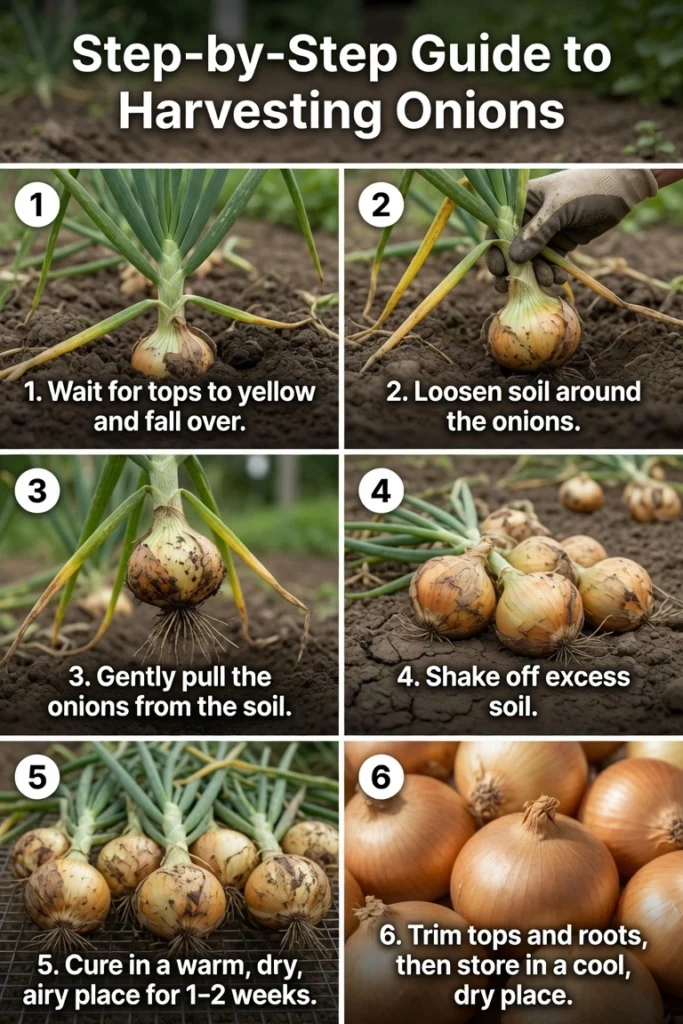
Proper technique during the harvesting onions process ensures quality bulbs and minimizes damage that could compromise storage.
Preparation Before Harvest
Begin by assessing your entire crop to ensure most plants display mature indicators. Reduce watering about 2-3 weeks before planned harvest, which helps dry out the bulbs and papery skin. However, if you’re experiencing drought conditions, maintain minimal watering to prevent bulb splitting.
Harvesting Process
When harvest day arrives, follow these steps:
- Choose the Right Day: Harvest on a dry, sunny day. Wet conditions can promote disease and make the task messier.
- Loosen the Soil: Use a garden fork or spade to carefully loosen the soil around each onion without piercing the bulb. Work the tool into the soil about 6-8 inches away from the plant to avoid damaging the bulb.
- Gently Pull: Grasp the dried foliage and gently pull the onion from the loosened soil. If resistance is encountered, use the fork to loosen the soil further rather than forcing the pull.
- Remove Excess Soil: Brush off clinging soil with your hands. Never wash harvested onions, as excess moisture promotes disease and reduces storage life.
Keep Foliage Attached: During initial harvest, leave the dried foliage attached to the bulb. This serves as a protective layer during the crucial curing phase.
Handling Injured Onions
Onions with cuts, bruises, or abrasions should be separated and used immediately rather than stored. These damaged onions are prone to rot and mold development, potentially contaminating nearby healthy bulbs.
The Critical Curing Process
Many gardeners underestimate the importance of proper curing after onion harvesting. This stage is absolutely essential for developing storage quality and extending shelf life.
What is Curing?
Curing is the process of drying the outer layers of the onion bulb and the foliage to create a protective barrier. During curing, the outer skin becomes papery and tough, the neck tightens (reducing pathogen entry points), and moisture content decreases significantly.
Proper Curing Techniques
After harvesting, lay your onions on the ground in a single layer in a warm, dry, well-ventilated location. Ideal curing conditions include:
- Temperature: 68-80°F (20-27°C)
- Humidity: 60-70% (not too dry, not too wet)
- Air Circulation: Good ventilation from all angles
Duration: 2-4 weeks depending on conditions and variety
Indoor curing works well on garage shelves, attics, or any well-ventilated space. Spread onions in single layers on screens, newspaper, or burlap. Avoid piling them on top of each other, which restricts airflow and promotes mold growth.
Signs of Proper Curing
Your onions are properly cured when the foliage is completely brown and dry, the outer skin layers are papery and shiny, and the necks are tight and thin. The bulb should feel lighter as moisture has evaporated.
Post-Harvest Trimming and Storage Preparation
Once curing is complete, proper trimming and storage preparation extend your onions’ shelf life significantly.
Trimming the Foliage
After curing, trim the dried foliage about an inch above the bulb. Use clean scissors or pruning shears to make a clean cut. Some gardeners prefer leaving slightly more foliage for braiding or enhanced storage aesthetics.
Root Trimming
Trim the root base to approximately a quarter-inch above the bulb. This removes the growing point and reduces the likelihood of sprouting during storage.
Inspection and Grading
Before storage, carefully inspect each bulb and remove any with soft spots, thick necks, double bulbs, or visible damage. These onions should be used first and won’t store long-term.
Optimal Storage Conditions for Harvested Onions
Proper storage extends your onion crop’s usefulness well beyond the initial harvest season.
Storage Temperature and Humidity
Store onions in cool conditions between 45-55°F (7-13°C) with relative humidity around 60-70%. This temperature range prevents sprouting and slows decay without causing damage. Basement storage, root cellars, or unheated garages often provide ideal conditions.
Storage Containers and Methods
Use breathable containers such as mesh bags, wooden crates, or cloth bags to maintain air circulation. Avoid plastic bags, which trap moisture and promote rot. Store onions in single layers when possible, or in shallow containers where they’re only a few layers deep.
Storage Duration
Properly cured and stored onions can last 3-6 months depending on variety and storage conditions. Short-day and sweet varieties have shorter storage life than long-day and storage varieties. Check stored onions regularly and remove any showing signs of sprouting or decay.
Common Harvesting Mistakes to Avoid
Understanding common errors helps ensure successful onion harvesting:
Harvesting Too Early
Pulling onions before foliage has sufficiently yellowed and fallen results in smaller bulbs, thicker necks, and reduced storage life. The premature harvest disrupts the plant’s energy redistribution to the bulb.
Harvesting Too Late
Leaving onions in the ground too long after maturity can cause bulbs to split, sunscald, or develop thicker necks vulnerable to disease. Late-harvested onions may also sprout if moisture conditions remain moist.
Washing Harvested Onions
Never wash onions immediately after harvest. Water removes the protective outer layers and promotes fungal diseases. Use a dry brush or let soil dry and fall away naturally.
Inadequate Curing
Rushing the curing process or storing onions without complete curing dramatically reduces storage life. Many gardeners experience rotting onions by storing them too quickly.
Poor Storage Conditions
Storing onions in warm, humid, or poorly ventilated spaces accelerates sprouting and decay. Avoid storing near ethylene-producing fruits like apples or potatoes, which accelerate ripening and sprouting.
Specialized Harvesting Techniques and Variations
Different onion types and purposes may require adjusted harvesting approaches:
Green Onions or Scallions
Unlike storage onions, green onions are harvested when the foliage is still tender and green. These are typically pulled at 50-70 days of growth when the white base is pencil-thin. No curing is necessary; simply trim and use immediately or refrigerate.
Pearl Onions
These small specialty onions are harvested when bulbs reach about 1 inch diameter. They can be cured and stored using standard methods or frozen after cooking.
Torpedo or Italian Red Onions
These elongated varieties follow standard harvesting protocols but may require slightly different timing depending on regional growing conditions and day length sensitivity.
Multiplier or Shallot-Type Onions
These varieties produce multiple bulbs per plant. Harvest when foliage falls and store using standard methods. Individual cloves can be replanted for next season’s crop.
Professional and Commercial Harvesting Methods
Large-scale growers employ mechanized approaches to harvesting onions efficiently:
Mechanical Harvesting Equipment
Commercial operations use specialized onion harvesting machines that undercut the soil, lift plants, and collect them in bins. These machines significantly reduce labor requirements but require large acreage to justify equipment costs.
Windrow Curing
After mechanical harvest, onions are arranged in windrows (long rows on the soil surface) to cure for 3-5 days before collection. This outdoor curing method works well in dry climates but is vulnerable to weather disruption.
Shed Curing Systems
Many commercial operations use specialized curing sheds with temperature and humidity controls, forced-air ventilation, and monitoring systems. These facilities achieve optimal curing conditions regardless of external weather.
Key Takeaways
- Timing is Critical: Harvest when 50-75% of foliage has yellowed and fallen over, typically 100-120 days after planting.
- Visual Cues Matter: Look for papery skin, thin necks, firm bulbs, and dried foliage—these indicate maturity.
- Gentle Handling: Use a garden fork to loosen soil and gently pull onions to avoid bruising and damage.
- Curing is Essential: Allow 2-4 weeks of proper curing in warm, well-ventilated conditions before storage or use.
- Store Properly: Keep cured onions in cool (45-55°F), well-ventilated containers for 3-6 months of storage life.
- Avoid Common Mistakes: Don’t harvest too early or late, don’t wash harvested onions, and don’t skip the curing process.
Inspect Before Storage: Remove damaged, thick-necked, or diseased onions to prevent contamination of healthy stock.
Frequently Asked Questions
Q1: Can I harvest onions at different times or must they all be harvested at once?
While onions in a field typically mature around the same time, you can harvest selectively based on individual plant readiness. If some plants show mature indicators before others, you can pull those and allow the remaining plants to develop further. However, once toppling has occurred across most of the crop, harvesting the entire patch within a few days is generally recommended to prevent bulb splitting or disease issues.
Q2: What should I do if my onions start flowering or bolting before harvest?
Bolting (premature flowering) often results from temperature stress, inconsistent watering, or specific day-length sensitivity. Onions that have flowered can still be harvested and used, though they typically don’t store as well as non-bolting varieties. Remove the flower stalk and use these onions fresh rather than storing them long-term. For future seasons, choose varieties better suited to your climate and maintain consistent moisture.
Q3: How can I tell if my onions are overripe or will spoil soon after harvest?
Overripe onions often have thick, woody necks or show signs of sprouting. If you notice onions beginning to sprout while still in the ground, harvest immediately. After harvest and curing, regularly inspect stored onions for soft spots, mold, or sprouting. Remove any compromised onions immediately to prevent disease spread to neighboring bulbs.
Q4: Is it possible to harvest partially mature onions and will they continue developing?
Onions harvested before full maturity won’t continue developing after removal from the soil. Harvest only when foliage indicators show appropriate maturity. However, you can intentionally grow some onions specifically for immediate use (green stage) by harvesting them earlier, though these smaller bulbs won’t store long-term.
Q5: What’s the difference between storage onions and sweet onions in terms of harvesting?
The basic harvesting process is identical, but timing and storage differ slightly. Storage onions (typically long-day varieties with pungent flavor) are harvested when foliage is completely brown and dry. Sweet onions (short-day varieties) are often harvested at a slightly earlier stage when some green remains in the foliage and are used within weeks rather than stored long-term. Sweet onions’ higher sugar and water content makes them less suitable for extended storage.
Advanced Tips from Experienced Growers
Seasoned vegetable gardeners often employ additional techniques to maximize their onion harvest quality:
Precision Watering Schedule
Experienced growers reduce watering frequency about 3-4 weeks before expected harvest. Drier soil conditions trigger the plant to focus energy on bulb maturation rather than foliage development. However, this technique requires careful monitoring to avoid complete drought stress, which damages developing bulbs.
Foliage Flattening Technique
Some veteran gardeners deliberately bend over onion foliage once about 10% yellowing is observed. This accelerates maturation by redirecting all energy to the bulb. If attempting this technique, do so gently to avoid breaking the foliage, which could create disease entry points.
Staggered Planting for Extended Harvest
Instead of planting your entire onion crop simultaneously, stagger plantings 2-3 weeks apart. This creates a succession of harvests over several months rather than one concentrated harvest, which is advantageous if storage space is limited.
Variety Selection for Extended Storage
Choose storage-type, long-day onion varieties if you want maximum storage duration. Varieties like ‘Copra,’ ‘Cortland,’ and ‘Yellow Sweet Spanish’ are bred specifically for storage and can last 5-6 months under proper conditions. Note that harvesting onions follows similar principles to other garden vegetables, requiring attention to maturity indicators and proper technique.
Troubleshooting Harvest-Related Problems
Encountering issues during your onion harvesting process is common. Here’s how to address them:
Thick-Necked Onions
Onions with disproportionately thick necks often result from harvesting too early, excessive nitrogen fertilizer in late season, or inconsistent watering. Use these onions immediately rather than storing, as the thick neck is an entry point for pathogens. For future crops, reduce nitrogen fertilization after bulbing begins and maintain consistent moisture.
Soft or Mushy Bulbs
Softness indicates either premature harvest or fungal disease development. If you’re harvesting at the right time but still encountering soft bulbs, investigate your soil conditions. Poor drainage and excessive moisture promote fungal diseases. Consider improving soil structure and drainage in future seasons.
Spontaneous Sprouting
Onions that sprout during storage typically weren’t properly cured, are stored too warm, or have begun natural dormancy break. Ensure complete curing before storage and maintain cool temperatures (45-55°F). If sprouting has just begun, you can remove the sprout and use the onion, but storage life is compromised.
Mold or Decay During Storage
Mold development indicates excessive humidity, poor air circulation, or inadequate curing before storage. Improve your storage conditions by increasing ventilation, reducing humidity, and lowering temperature slightly. Prevent future issues by extending curing time in future seasons.
Seasonal Considerations and Climate Adaptations
Your local climate significantly impacts onion harvesting timing and techniques:
Hot, Arid Climates
In desert regions, accelerate harvest timing since onions may mature earlier due to high temperatures. Provide shade during late-season curing if outdoor temperatures exceed 85°F, as excessive heat can damage bulbs. Use indoor curing spaces with temperature control.
Humid, Wet Climates
In areas with high rainfall and humidity, extend curing periods and use well-ventilated indoor curing spaces rather than outdoor windrows. Monitor for fungal diseases more vigilantly, as humidity promotes mold. Consider using fungicidal treatments or sulfur dust if mold develops.
Cool Northern Climates
In cooler regions, choose long-day onion varieties and plant as early as soil can be worked. Plan harvest for late August or September before frost arrives. Use proper storage in unheated spaces to maintain cool temperatures naturally.
Mild Southern Climates
In southern regions, plant onions in fall for spring harvest or use short-day varieties in spring. These regions may enable year-round onion growing with successive plantings.
Understanding Different Onion Varieties and Their Harvest Characteristics
Different onion types mature at different rates and have varying storage capabilities. Understanding these differences helps optimize your harvesting strategy.
Yellow Storage Onions
Yellow onions like ‘Copra’ and ‘Walla Walla’ are reliable storage varieties with excellent keeping quality. Harvest when foliage is completely brown and dry. These pungent onions store 5-6 months under ideal conditions and are ideal for the home gardener wanting extended storage.
White Onions
White onions mature slightly earlier than yellow varieties. They’re excellent for fresh use but don’t store as long (3-4 months). Harvest when foliage shows significant browning.
Red Onions
Red onions develop thick, papery red and purple skin that’s very attractive. Storage life is comparable to yellow onions (4-5 months). Harvest using standard timing indicators.
Sweet or Candy Onions
Spanish sweet onions, Vidalias, and similar varieties have high sugar content and lower sulfur compounds. These are typically harvested slightly earlier than storage varieties and used within weeks rather than months. Their higher moisture content makes them less suitable for long-term storage.
Harvesting onions Using Modern Technology and Innovation
Contemporary gardeners are adopting new tools and methods to improve their harvesting process:
Soil Moisture Sensors
Smart soil moisture sensors help determine optimal watering reduction timing by monitoring soil conditions. This data-driven approach removes guesswork from the drying period before harvest.
Temperature and Humidity Monitoring
Wireless monitoring systems track curing conditions in real-time, alerting growers when adjustments are needed. Home gardeners can set up simple thermometers and hygrometers to track their curing spaces.
Crop Documentation and Record-Keeping
Photographing your crop at various growth stages and keeping detailed records of planting dates, harvest dates, and storage outcomes helps optimize future seasons. Many gardeners use mobile apps specifically designed for vegetable garden tracking.
Maximizing Yield: Pre-Harvest Practices That Influence Harvest Success
Successful harvesting begins long before you pull the first onion. Pre-harvest practices significantly impact your final harvest:
Soil Preparation
Well-prepared soil rich in organic matter and properly balanced nutrients produces stronger, larger onions. Incorporate compost and aged manure in fall for spring planting. Ensure soil drains well to prevent waterlogging.
Appropriate Variety Selection
Choosing varieties suited to your day-length region and climate is crucial. Northern gardeners need long-day varieties, southern gardeners need short-day varieties. Regional agricultural extension offices can recommend proven varieties for your area.
Consistent Moisture Management
Onions need consistent moisture throughout the growing season. Provide approximately 1 inch of water weekly through rainfall or irrigation. Fluctuating moisture causes splits and double bulbs, complicating harvest.
Proper Fertilization Strategy
Early-season nitrogen promotes foliage development. Reduce nitrogen application once bulbing begins (usually mid-season) to prevent thick-necked, late-storing onions. Adequate phosphorus and potassium support bulb development and storage quality.
Disease and Pest Management
Healthy plants at harvest time produce better-storing onions. Manage common onion pests like onion flies and thrips and diseases like powdery mildew and pink root rot through cultural practices and, if necessary, appropriate treatments.
Environmental and Sustainability Considerations
Growing and harvesting onions sustainably supports both your garden ecosystem and the broader environment:
Water Conservation
Implement drip irrigation or soaker hoses to minimize water waste while maintaining consistent soil moisture. Mulching reduces evaporation losses. Reducing water before harvest aids both the plant’s maturation and conserves resources.
Organic Matter Cycling
Incorporating onion crop residue back into the soil returns nutrients and improves soil structure. However, avoid composting diseased plants in backyard systems; dispose of them in municipal green waste instead.
Pesticide Minimization
Where possible, use integrated pest management techniques rather than chemical sprays. Encourage beneficial insects, practice crop rotation, and select disease-resistant varieties to reduce pesticide needs.
Energy-Efficient Storage
Store onions in unheated spaces whenever possible to minimize energy requirements. Root cellars, unheated basements, or outdoor cold frames maintain ideal temperatures without electricity in many climates.
Processing and Using Your Harvest Beyond Fresh Storage
While storage preserves onions for months, processing techniques extend their utility even further:
Dehydrating Onions
Slice onions thinly and dehydrate in a food dehydrator or low oven (around 150°F) until completely dry. Dehydrated onions store indefinitely in airtight containers and rehydrate well for cooking.
Caramelizing and Preserving
Slowly cooked caramelized onions can be frozen in portions for future use. This process concentrates flavors and creates a versatile ingredient for sauces, toppings, and preparations.
Pickling and Fermentation
Small onions or pearl onions pickle beautifully. Fermented onions provide probiotic benefits and unique flavors while extending shelf life indefinitely at cool temperatures.
Onion Powder and Flakes
Dehydrated onions ground into powder create a convenient seasoning ingredient. This processing method captures the peak flavor of fresh onions in a shelf-stable form.
For further detailed guidance on harvesting techniques and timing, onion harvesting resources provide professional insights from experienced growers and agricultural specialists.
Conclusion: Mastering the Art and Science of Onion Harvesting
Successfully harvesting onions combines careful observation, proper timing, and meticulous technique to produce bulbs that store beautifully and deliver exceptional flavor throughout the season. The journey from recognizing maturity indicators through the critical curing phase to optimal storage creates the foundation for enjoying your harvest for months.
Remember that harvesting onions is not merely pulling bulbs from the ground; it’s the culmination of months of careful cultivation and preparation. By understanding your onion varieties, recognizing precise maturity indicators, employing gentle handling techniques, and implementing proper curing and storage methods, you’ll maximize both the quality and longevity of your crop.
Whether you’re a backyard gardener growing onions for personal use or a small-scale producer selling at farmers’ markets, the principles outlined in this comprehensive guide apply universally. Start by mastering the basics—timing your harvest when foliage has appropriately aged, handling bulbs gently to prevent damage, and implementing thorough curing before storage. As you gain experience and confidence, you can experiment with advanced techniques, different varieties, and processing methods that transform your onion harvest into diverse culinary applications.
The satisfaction of pulling perfectly mature onions from your garden, successfully storing them for months of use, and preparing meals with onions you’ve grown yourself makes the effort entirely worthwhile. Begin with the fundamentals, document your results, and refine your approach each season. With practice and attention to detail, you’ll develop the expertise to produce outstanding onions that rival anything available commercially, all from your own garden.