Table of Contents
Introduction
Growing cucumbers in your garden is one of life’s simple pleasures, but knowing exactly when and how to harvest them can make the difference between crisp, flavorful vegetables and bitter disappointments. A successful cucumber harvest requires understanding the subtle signs of ripeness, proper timing techniques, and the right harvesting methods to ensure your plants continue producing throughout the growing season. Learning when to harvest cucumbers is essential for maximizing both quality and quantity from your garden investment. Whether you’re growing slicing varieties, pickling cucumbers, or specialty types, this comprehensive guide will transform you from a novice gardener into a cucumber harvesting expert.
Understanding Cucumber Maturity and Readiness Signs
Visual Indicators of Ripeness
The most reliable way to determine cucumber readiness involves examining several visual characteristics that develop as the fruit matures. Look for cucumbers that have reached their expected size according to the variety specifications listed on your seed packet or plant tag. Most slicing cucumbers should measure between 6-8 inches in length, while pickling varieties typically reach optimal harvest size at 2-4 inches long.
Color consistency serves as another crucial indicator of readiness. Mature cucumbers display an even, vibrant green color without yellow patches or streaks. Any yellowing typically indicates overripeness, which can result in bitter flavors and tough, seedy flesh that’s unpleasant to eat.
Physical Texture and Firmness Tests
Gently squeeze your cucumbers to assess their firmness and texture. Perfectly ripe cucumbers feel solid and firm to the touch, with smooth, unblemished skin that has a slight glossy appearance. Avoid harvesting cucumbers that feel soft, spongy, or have wrinkled skin, as these signs indicate the fruit has passed its prime harvesting window.
The cucumber’s diameter also provides valuable information about readiness. Most varieties should maintain consistent thickness from end to end, without the bulging or narrowing that can occur in stressed or improperly developed fruits.
Optimal Timing Strategies for Maximum Yield
Daily Harvesting Schedules
Implementing a consistent daily harvesting routine dramatically increases your overall cucumber production throughout the growing season. Check your cucumber plants every morning when temperatures are cooler and the fruits contain maximum moisture content. This timing prevents stress on both the plants and the harvested cucumbers while ensuring you catch fruits at their absolute peak quality.
Morning harvesting also allows you to spot new cucumber formations early, helping you track the development of future harvests. Regular observation helps you recognize patterns in your specific growing conditions and variety performance.
Weather Considerations and Environmental Factors
Weather conditions significantly impact cucumber development and optimal harvesting timing. During hot, dry periods, cucumbers may mature more quickly and require more frequent monitoring to prevent overripening. Conversely, cool, wet weather can slow development and extend the time between flowering and harvest readiness.
Consider harvesting slightly earlier during extended hot spells to prevent bitterness from developing. High temperatures and water stress can trigger the production of cucurbitacin, the compound responsible for bitter flavors in cucumbers.
Proper Harvesting Techniques and Tools
Essential Harvesting Equipment
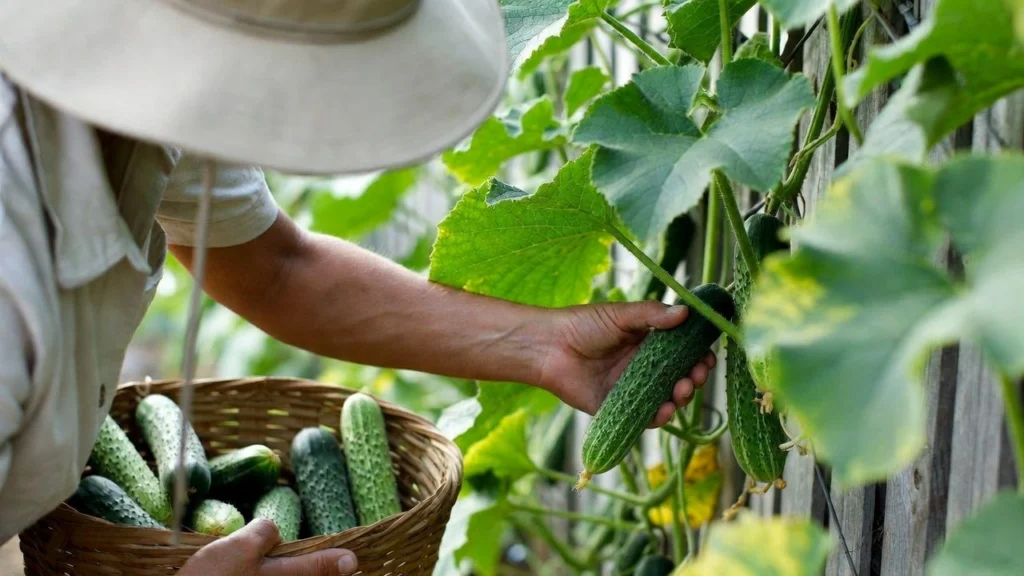
Using the right tools ensures clean cuts that promote continued plant health and productivity. Sharp garden shears, pruning scissors, or a clean knife work best for harvesting cucumbers without damaging the vine or remaining fruits. Avoid pulling or twisting cucumbers off the vine, as this can damage the plant’s delicate stems and reduce future production.
Clean your cutting tools with rubbing alcohol between plants to prevent the spread of diseases that can devastate your cucumber crop. This simple sanitization step protects your investment and ensures healthy plant development throughout the growing season.
Harvesting Methodology for Plant Health
Cut cucumber stems approximately one-quarter inch above the fruit’s attachment point to the vine. This technique leaves enough stem to prevent damage to the main plant while removing the entire cucumber cleanly. Make cuts at a slight angle to prevent water from pooling on the cut surface, which could lead to rot or disease development.
Handle harvested cucumbers gently to prevent bruising, which can lead to rapid deterioration and reduced storage life. Place harvested fruits in a shallow container rather than deep baskets that might cause pressure damage to cucumbers at the bottom.
Tips for Maximizing Your Cucumber Harvest Success
Consistent watering practices throughout the growing season ensure steady cucumber development and prevent the stress-related bitterness that can ruin otherwise perfect fruits. Maintain soil moisture levels without waterlogging, as cucumbers require well-draining soil to thrive and produce quality harvests.
Mulching around cucumber plants helps retain soil moisture, suppress weeds, and maintain consistent soil temperatures that promote steady growth. Organic mulches like straw or shredded leaves also break down over time, adding valuable nutrients to your soil ecosystem.
Regular fertilization with balanced nutrients supports continuous cucumber production throughout the harvest season. Side-dress plants with compost or balanced fertilizer every 3-4 weeks to maintain vigorous growth and fruit development.
Alternative Methods for Extended Harvesting Seasons
Succession Planting Strategies
Plant new cucumber seeds every 2-3 weeks throughout your growing season to ensure continuous harvests from spring through fall. This staggered planting approach provides fresh cucumber supplies when earlier plantings begin declining in productivity.
Choose cucumber varieties with different maturation times to extend your harvesting window naturally. Combine early-season varieties with mid-season and late-season types for maximum harvest diversity and timing flexibility.
Container Growing for Controlled Harvesting
Growing cucumbers in containers allows greater control over growing conditions and can extend harvesting seasons in areas with shorter growing periods. Container-grown cucumbers can be moved to protected locations during extreme weather, ensuring consistent production and harvest opportunities.
Select compact or bush varieties specifically developed for container growing to maximize space efficiency and harvest potential in smaller growing areas.
Conclusion
Achieving the perfect cucumber harvest combines knowledge, timing, and proper techniques that any gardener can master with practice and attention to detail. Understanding when to harvest cucumbers transforms your gardening experience from guesswork into a confident, rewarding practice that yields delicious results season after season. Remember that consistent observation, gentle handling, and regular harvesting encourage continued production while ensuring the highest quality cucumbers for your kitchen table. With these proven strategies and techniques, you’ll enjoy abundant cucumber harvests that provide fresh, crisp vegetables throughout the entire growing season while building confidence in your gardening abilities.