Table of Contents
Budget Gardening Tips: 25 Affordable Ways to Create Your Dream Garden in 2024
Creating a beautiful, thriving garden doesn’t require a substantial financial investment. Whether you’re a seasoned horticulturist or a complete beginner, growing plants on a budget is entirely achievable with the right knowledge and strategies. In this comprehensive guide, we’ll explore practical budget gardening tips and affordable growing techniques that will help you cultivate a stunning outdoor space without emptying your wallet.
Gardening represents one of the most rewarding hobbies available to homeowners and apartment dwellers alike. Beyond the aesthetic benefits, cultivating your own garden provides fresh produce, therapeutic benefits, and a deeper connection to nature. The challenge many face isn’t the desire to garden—it’s the perception that gardening requires expensive equipment, premium seeds, and professional landscaping services. This couldn’t be further from the truth.
Why Budget Gardening Matters: The Real Value of Affordable Growing
The gardening industry generates billions in revenue annually, with consumers often believing they must purchase premium products to achieve results. However, this perception creates unnecessary barriers for aspiring gardeners. Budget gardening isn’t about compromising quality; it’s about maximizing resources and leveraging intelligent growing practices.
Financial accessibility democratizes gardening, allowing individuals from all economic backgrounds to participate in this enriching activity. When you garden on a budget, you learn to:
- Maximize resource efficiency and waste reduction
- Develop problem-solving skills through creative solutions
- Understand plant biology and growing principles more deeply
- Build sustainable practices that benefit the environment
Experience genuine satisfaction from accomplishing more with less
Starting Your Budget Garden: Essential Foundations
Assess Your Growing Space and Sunlight
Before purchasing any supplies, evaluate your available growing space. Observe how sunlight moves across your yard or balcony throughout the day. Most vegetables and flowering plants require between 6-8 hours of direct sunlight daily. This free assessment determines what you can successfully cultivate, preventing costly mistakes with unsuitable plants.
Document your observations for future reference. Understanding your microclimate—the specific environmental conditions of your space—eliminates guesswork from plant selection. This simple step saves money by ensuring you choose plants naturally suited to your conditions.
Test Your Soil Without Expensive Kits
Professional soil testing can cost $15-40, but you can perform basic soil assessment using methods that cost nothing. The jar test involves filling a clear container with soil, adding water, and observing how quickly the soil settles. Clay settles last (it’s heavy), sand settles first (it’s light), and organic matter floats. This reveals your soil composition.
Additionally, observe what grows naturally in your area. Indigenous plants indicate soil conditions. Acidic soil supports azaleas and blueberries, while alkaline soil favors clematis and lilacs. Native plants adapted to your soil require minimal amendments.
Budget-Friendly Seeds and Seedlings: Maximizing Your Investment
Purchasing Seeds Over Seedlings
One of the most significant budget gardening tips involves seed purchasing strategies. A packet of seeds typically costs $1-3 and contains 50-200+ seeds, while a single seedling costs $3-10. Growing from seeds reduces costs by 70-80%. While seeds require patience and proper care, the financial savings justify the investment.
Purchase seeds in bulk from online retailers specializing in affordable options. Established seed companies like Johnny’s Selected Seeds, Burpee, and True Leaf Market frequently offer discounts, bulk pricing, and seasonal promotions. Sign up for their email lists to receive exclusive offers.
Saving Seeds from Previous Harvests
Once you’ve successfully grown heirloom varieties, save seeds for next season. Many vegetables produce viable seeds—tomatoes, peppers, beans, peas, and lettuce. Dried seeds stored in cool, dry conditions remain viable for years. One packet of seeds can provide hundreds of seeds for future growing seasons, making this the ultimate budget gardening strategy.
Document seed-saving dates and varieties. Create a simple spreadsheet tracking which seeds performed best. This information guides future purchasing decisions and helps you gradually transition to entirely free seed supplies.
Seed Swapping Communities
Connect with local gardening groups and online communities participating in seed swaps. Websites like Seed Savers Exchange and social media gardening groups facilitate exchanges where members share surplus seeds. This community-driven approach costs nothing while expanding your plant variety.
Cheap Gardening Ideas for Essential Tools and Equipment
DIY Tools and Equipment
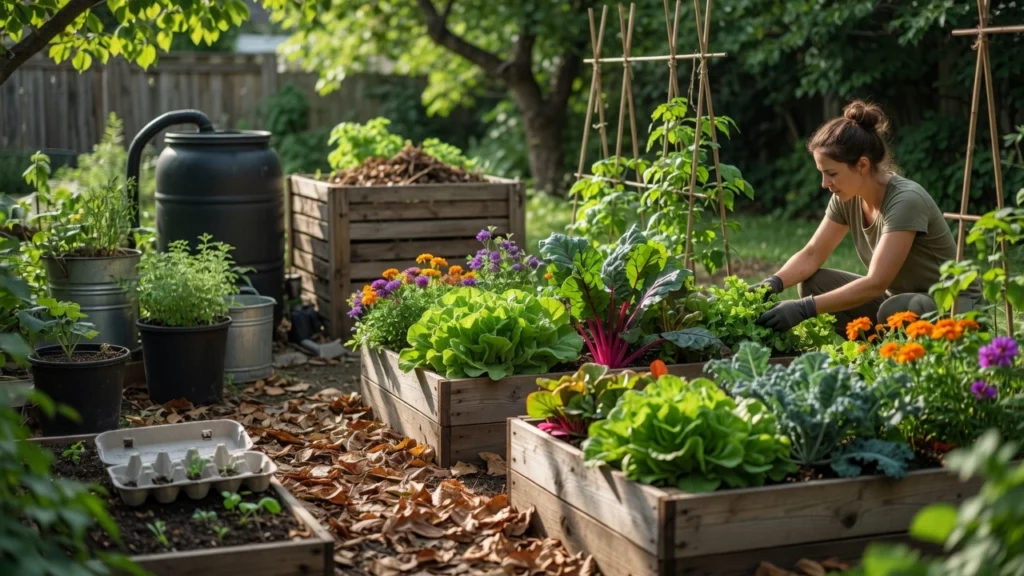
Expensive garden tools aren’t necessary for successful cultivation. Repurpose household items to create budget-friendly alternatives:
- Watering cans: Milk jugs, plastic bottles, and laundry detergent bottles work perfectly
- Plant markers: Popsicle sticks, stones, recycled wood, and plastic spoons identify plantings
- Row covers: Old bed sheets, burlap, and netting protect seedlings
- Trellises: Branches, bamboo poles, and sturdy twine create support structures
- Mulch: Grass clippings, shredded leaves, and newspaper conserve moisture
Containers: Broken pots, yogurt cups, egg cartons, and food storage containers start seeds
This creative approach transforms household waste into functional gardening equipment while reducing expenses to nearly nothing. Many gardeners report their best ideas emerged from repurposing available materials.
Essential Tools Worth Investing In
While budget gardening minimizes spending, a few quality tools justify investment. A reliable hand shovel, pruning shears, and garden fork perform countless tasks and last years. Purchase these items gradually rather than all at once, spreading costs across multiple seasons. Quality tools prevent frustration and reduce the need for replacements.
Free and Nearly-Free Soil Amendments and Fertilizers
Composting: Creating Free Fertilizer
Composting represents perhaps the most impactful budget gardening practice. Converting kitchen scraps and yard waste into nutrient-rich compost eliminates fertilizer expenses while reducing waste. Composting requires no special equipment—a simple pile in a corner works perfectly.
Layer “brown” materials (dry leaves, shredded paper, cardboard) with “green” materials (vegetable scraps, grass clippings, coffee grounds). Turn the pile occasionally and water as needed. Within 2-6 months, you’ve created premium soil amendment worth $20-50 per cubic yard if purchased commercially.
Kitchen Scraps as Fertilizer
Rather than composting, use kitchen scraps directly in gardens. Eggshells crushed and buried near plants provide calcium. Coffee grounds increase nitrogen content. Banana peels contain potassium. Blend these waste products with soil for immediate nutrient boosts. This transforms ordinary trash into valuable plant nutrition.
Grass Clippings and Leaf Litter
Free mulch surrounds you seasonally. Collect grass clippings from mowing and shredded leaves in autumn. These materials decompose, enriching soil while conserving moisture and suppressing weeds. No chemical treatments needed.
Water Conservation Strategies for Budget-Conscious Gardeners
Rainwater Collection Systems
Instead of paying for municipal water, collect rainfall using simple systems. A basic rain barrel costs $30-100 or less if constructed from used containers. During rainy seasons, you’ll collect hundreds of gallons of free water. This represents one of the smartest cheap gardening ideas, as water costs accumulate significantly for regular gardeners.
Watering Efficiency Techniques
Mulching reduces watering frequency by 50-70%. Water in early morning or evening to minimize evaporation. Use drip irrigation or soaker hoses directing water directly to roots rather than sprinklers wasting water on foliage. These techniques cost little while dramatically reducing water usage and expenses.
Inexpensive Pest and Disease Management
Natural Pest Control Methods
Chemical pesticides cost money while introducing toxins to your garden ecosystem. Natural pest management proves more economical and effective long-term. Encourage beneficial insects like ladybugs and lacewings. Plant companion plants deterring pests—marigolds repel many insects, basil deters flies and mosquitoes.
Neem oil, insecticidal soap, and diatomaceous earth provide affordable natural pest control. Many gardeners successfully use simple solutions like water sprays, hand-picking pests, and row covers to manage pest populations without any chemical expenses.
Disease Prevention Without Expensive Treatments
Proper spacing ensures air circulation, preventing fungal diseases. Water at soil level rather than overhead to keep foliage dry. Remove diseased plant material promptly. These free prevention methods eliminate the need for expensive fungicides and disease treatments.
Propagating Plants for Multiplied Returns
Propagation from Cuttings
Many plants propagate easily from cuttings. Herbs like basil, mint, and rosemary root readily in water. Succulents propagate from individual leaves. This free propagation method transforms one plant into dozens, eliminating future plant purchases. A $5 herb plant becomes dozens of plants through simple propagation.
Division and Layering Techniques
Perennials and ornamental grasses multiply through division. Simply dig plants, separate root systems, and replant divisions. Layering—bending plant stems to soil where roots develop—creates new plants attached to parent plants. These techniques cost nothing while expanding your garden’s plant population exponentially.
Strategic Garden Design for Maximum Budget Impact
Seasonal Succession Planting
Maximize productivity by planting different crops sequentially. Cool-season crops (lettuce, broccoli, spinach) grow spring and fall. Warm-season crops (tomatoes, peppers, squash) flourish summer. By rotating plantings, a single garden bed produces multiple harvests annually, increasing returns on your initial investment.
Vertical Gardening for Space Efficiency
Vertical gardens maximize productive space, crucial for budget gardeners with limited areas. Trellises, hanging baskets, and stacked containers increase growing space without expanding footprints. Vertical arrangements typically cost less than expanding horizontally while producing impressive yields from minimal ground space.
Learning Resources and Community Connection
Free Education and Expert Guidance
Extensive free gardening information exists online through university extension services, governmental agricultural departments, and established gardening websites. The Cooperative Extension System provides research-backed gardening information completely free. YouTube channels offer countless gardening tutorials without premium subscriptions.
For additional budget gardening tips and creative inspiration, explore budget gardening tips from experienced gardeners sharing their most effective strategies. Additionally, cheap gardening ideas provide comprehensive resources for cost-conscious cultivators.
Local Gardening Communities
Join local master gardener programs, garden clubs, and community gardening initiatives. These organizations facilitate knowledge sharing, resource exchanges, and friendship among gardeners. Many members willingly share plant divisions, seeds, and advice, creating supportive ecosystems for budget gardeners.
Common Budget Gardening Mistakes to Avoid
Overbuying Seeds and Supplies
Enthusiasm often leads to excessive purchases. Start small with a few favorite plants rather than attempting complete garden transformations immediately. Gradual expansion allows learning without financial waste.
Ignoring Soil Quality
While free amendments help, completely neglecting soil investment creates ongoing problems. Invest modest amounts in quality compost initially, then maintain using home-generated compost and free amendments. This balanced approach proves economical long-term.
Neglecting Proper Plant Spacing
Crowded plants develop diseases, reducing harvests despite the apparent efficiency of dense planting. Proper spacing ensures healthy plants requiring fewer interventions and producing better yields.
Seasonal Budget Gardening Strategies
Spring Planning and Preparation
Spring marks gardening season’s beginning. Use this time for free soil testing, assessing light conditions, and planning layouts. Collect free materials for projects before gardening season’s rush. Planning meticulously now saves money throughout the season.
Summer Maintenance on a Budget
Summer’s heat increases watering needs, but mulching reduces requirements significantly. Deadheading spent flowers extends blooming periods, maximizing visual impact from existing plantings. Regular monitoring prevents pest problems requiring expensive interventions.
Fall Harvest and Preservation
Autumn offers opportunities for seed saving and succession planting. Collect fallen leaves for composting and mulching. Plan next season’s experiments based on current season’s results.
Key Takeaways
- Growing gardens on a budget requires planning and creativity rather than financial investment
- Seeds provide 70-80% savings compared to purchasing seedlings
- Composting creates free fertilizer while reducing household waste
- Repurposed household items eliminate tool expenses
- Rainwater collection and efficient watering reduce ongoing costs
- Natural pest management proves more economical than chemical treatments
- Plant propagation multiplies returns from initial investments
- Community connection provides free knowledge and resource sharing
- Proper planning prevents costly mistakes and wasted purchases
Budget gardening develops skills and satisfaction beyond financial benefits
Frequently Asked Questions About Budget Gardening
Q: How much money do I need to start a garden on a budget?
A: You can begin gardening with under $50 using free materials like recycled containers, collected seeds, and homemade compost. If starting from complete scratch, $100-200 purchases essential seeds, basic tools, and soil amendments. This proves substantially less than most hobbies’ initial investments, especially when considering the ongoing fresh produce and therapeutic benefits.
Q: What’s the best time of year to start budget gardening?
A: Spring offers ideal conditions for most gardeners, but fall gardening in warmer climates provides equally good opportunities. The optimal time depends on your location’s growing season and climate zone. Start planning in late winter, execute in early spring or fall depending on your region. Research your specific USDA hardiness zone and frost dates for precise timing.
Q: Can I grow vegetables in containers on a budget?
A: Absolutely. Container gardening works excellently on budgets. Use recycled buckets, storage containers, laundry baskets lined with plastic, or broken terracotta pots. Fill containers with homemade compost mixed with garden soil. Many vegetables thrive in containers—tomatoes, peppers, lettuce, herbs, and beans produce abundantly in modest-sized containers. This approach works perfectly for apartment dwellers and those with limited space.
Q: How do I save money on water costs while gardening?
A: Implement multiple strategies: collect rainwater, apply mulch reducing evaporation, water during early morning or evening minimizing losses, use drip irrigation or soaker hoses directing water to roots, and choose drought-tolerant plants. These combined approaches reduce water usage by 50-70%. In areas with water restrictions, these techniques prove essential rather than optional.
Q: What budget-friendly plants provide the best returns?
A: Perennials offer excellent value as they return annually without replanting. Herbs like basil, mint, and oregano provide ongoing harvests from minimal investment. Tomatoes, zucchini, and beans produce abundantly from small seed investments. Lettuce and greens provide quick harvests with successive plantings. Established fruit bushes offer years of productivity. Choose plants thriving in your specific climate for maximum success and minimum expenditure on replacements.
Conclusion: Your Budget Gardening Journey Awaits
Creating a thriving garden on a budget transcends financial limitations—it represents a philosophy embracing resourcefulness, sustainability, and genuine connection with plants and nature. The budget gardening tips and cheap gardening ideas explored throughout this guide demonstrate that expensive equipment and premium products aren’t prerequisites for gardening success.
Your gardening journey begins with a single decision: to cultivate something from nothing using intelligence, creativity, and determination. Start small with a single container or modest garden bed. Implement composting, save seeds, propagate plants, and gradually expand your green space. Each success builds confidence and skill for increasingly ambitious projects.
Budget gardening offers unexpected rewards beyond financial savings. You’ll discover deep satisfaction watching seeds transform into thriving plants, harvesting produce you’ve nurtured from germination, and sharing surplus harvests with friends and family. You’ll develop problem-solving skills and horticultural knowledge that endure throughout your life.
The most experienced gardeners often began exactly where you are—with curiosity, limited funds, and enthusiasm. They learned through experimentation, community connection, and gradual skill development. Your unique growing conditions, climate, and challenges will create learning opportunities impossible to anticipate. Embrace this journey with patience, maintaining realistic expectations while celebrating small victories.
Gardening represents one of humanity’s oldest and most rewarding activities. For millennia, ordinary people cultivated food and beauty on modest resources. You’re joining this ancient tradition, participating in humanity’s fundamental connection with soil, seeds, and growing things. Whether you’re motivated by fresh produce, therapeutic benefits, environmental consciousness, or pure joy in watching things grow, budget gardening makes this enriching activity accessible to everyone.
Begin today. Assess your space, collect free materials, plant your first seeds, and embrace the adventure ahead. Your budget garden will astonish you with abundance, teach you invaluable lessons, and provide satisfaction no amount of money can purchase. The most beautiful gardens aren’t necessarily the most expensive—they’re the ones tended with care, creativity, and genuine passion for growing living things.