Table of Contents
Introduction
Picture this: you swing open your shed door, expecting to grab the hedge trimmer, only to be greeted by an avalanche of garden tools, holiday decorations, and mystery boxes that haven’t seen daylight since 2019. Sound familiar? If you’re nodding your head right now, you’re definitely not alone in the battle against shed chaos.
I learned this lesson the hard way when my own 8×10 shed became such a disaster zone that I literally couldn’t find my lawnmower for three weeks. It was buried somewhere behind paint cans, camping gear, and a broken patio umbrella I kept meaning to fix. That frustrating experience sparked my journey into discovering game-changing shed storage ideas that would transform my outdoor storage space from chaos to order.
The truth is, most of us treat our sheds like outdoor junk drawers – shoving everything inside and hoping for the best. But with the right organizational strategies and some creative thinking, your shed can become an efficient, accessible storage system that actually makes your life easier. Whether you’re dealing with garden tools, seasonal decorations, sports equipment, or workshop supplies, implementing smart backyard shed storage solutions will help you reclaim your space and your sanity.
Maximizing Vertical Space: The Game-Changer You’ve Been Missing
Wall-Mounted Storage Systems
The biggest mistake I see people make is ignoring their shed walls entirely. Those bare walls are prime real estate for storage, and learning to think vertically was the single most transformative change I made to my own shed organization system.
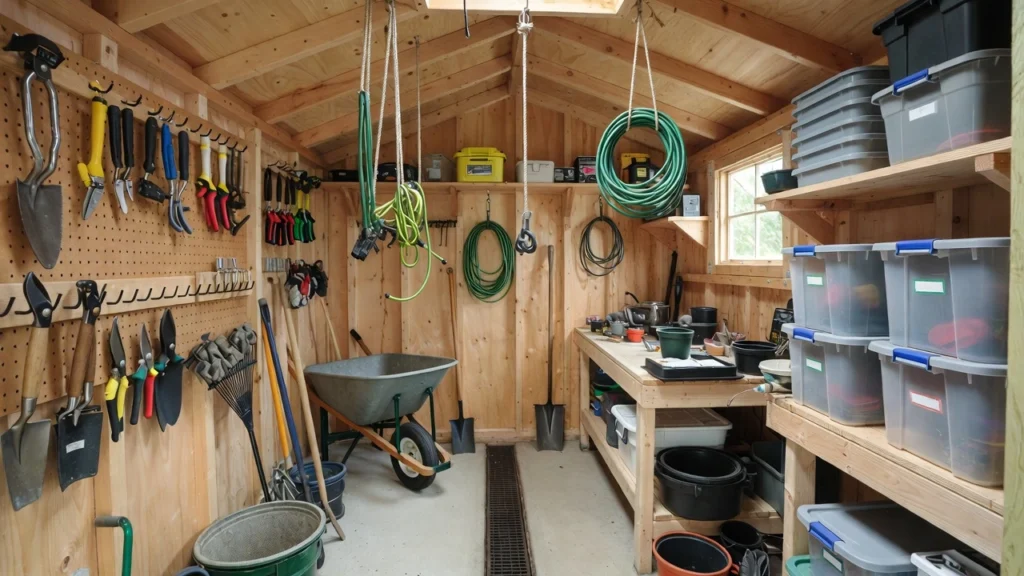
Pegboard panels are absolute workhorses for tool storage. Install a large pegboard section on one wall, and suddenly you have customizable storage for everything from hammers and screwdrivers to garden gloves and spray bottles. The beauty of pegboard lies in its flexibility – you can rearrange hooks and accessories as your storage needs change throughout the seasons.
French cleat systems take wall storage to the next level. These ingenious wooden strips create a hanging system that’s incredibly strong and versatile. I installed a French cleat system along my back wall and now use it to hang everything from my leaf blower to bins full of extension cords. The best part? You can easily move items around or add new storage components without drilling new holes.
Ceiling Storage Solutions
Don’t forget to look up! Your shed’s ceiling is valuable storage territory that often goes completely unused. Overhead storage racks are perfect for lightweight, bulky items that you don’t need frequent access to – think seasonal decorations, camping gear, or pool supplies.
I installed a simple pulley system in my shed that lets me easily raise and lower a storage platform. It’s become the perfect home for my Christmas decorations, which I only need once a year but used to take up precious floor space for eleven months. The pulley system means I’m not wrestling with a ladder every time I need to access something stored up high.
Creating Efficient Floor Storage and Work Areas
Strategic Shelving Placement
While vertical storage is crucial, you’ll still need some floor-level storage for heavier items and frequently used tools. The key is being strategic about where you place shelving units and how you organize them.
Corner shelving units make excellent use of otherwise awkward spaces. I discovered that the corners of my shed were perfect for storing paint cans, fertilizer bags, and other containers that don’t stack well. Metal utility shelving works great for this purpose because it’s sturdy enough to handle heavy items and won’t warp in humid conditions like some wooden shelves might.
Mobile storage carts have become one of my favorite additions. These wheeled units can hold frequently used items and be rolled outside when you’re working in the garden or doing yard projects. I keep one loaded with basic gardening supplies – hand tools, gloves, plant food, and watering accessories. When it’s time to tend the flower beds, I just roll the cart right to where I’m working.
Designated Work Zones
Creating specific zones within your shed makes everything more efficient and helps prevent the gradual slide back into chaos. Designate one area as your potting station with soil, pots, and gardening tools. Set up another zone for maintenance and repairs with your toolbox, hardware supplies, and work surface.
A fold-down workbench is a brilliant space-saving solution that gives you a proper work surface when you need it but doesn’t permanently eat up floor space. I built a simple hinged bench that folds flat against the wall when not in use. When I need to repot plants or fix something, it provides a sturdy 24-inch deep work surface at the perfect height.
Smart Container and Labeling Strategies
Choosing the Right Containers
Not all storage containers are created equal, especially when dealing with shed environments that experience temperature fluctuations and humidity changes. Plastic bins with tight-fitting lids protect contents from moisture and pests, but make sure to choose ones made from UV-resistant materials if your shed gets direct sunlight.
Clear containers are worth their weight in gold for shed organization. Being able to see what’s inside without opening every box saves enormous amounts of time and frustration. I learned this lesson after spending twenty minutes searching through opaque bins for a specific drill bit that was sitting in plain sight in a clear container I hadn’t thought to check first.
For smaller items like screws, nails, and garden seeds, drawer organizer systems work wonderfully. These stackable units with multiple small compartments keep tiny items sorted and easily accessible. I use them for everything from plant markers to electrical supplies, and they’ve eliminated the dreaded “junk drawer” phenomenon that plagued my old storage system.
Labeling That Actually Works
Even with clear containers, proper labeling is essential for maintaining organization long-term. Use a label maker or waterproof markers to clearly mark what belongs in each space. Include details that will matter six months from now – “Christmas lights” is more helpful than just “decorations” when you’re specifically looking for string lights in December.
Color-coding adds another layer of organization that makes finding things almost effortless. I use red labels for emergency supplies, green for gardening items, blue for maintenance tools, and yellow for seasonal decorations. This visual system means I can spot what I need from across the shed without having to read individual labels.
Tips for Maintaining Your Organized Shed Storage
Regular maintenance is what separates temporarily organized sheds from permanently functional ones. Schedule quarterly organizing sessions where you reassess what’s working and what isn’t. I do mine at the start of each season, which naturally aligns with when my storage needs shift.
The “one in, one out” rule helps prevent accumulation creep. When you bring something new into the shed, make sure something else leaves. This might mean finally throwing away that broken hose you’ve been meaning to repair for two years or donating tools you never actually use.
Seasonal rotation keeps your most-needed items easily accessible. Store summer items like pool chemicals and lawn care supplies at eye level during warm months, then swap their positions with winter gear like snow shovels and ice melt when the seasons change. This simple rotation means you’re not constantly moving things around to reach what you need.
Create a simple inventory list for items you don’t use frequently. I keep a small notebook in my shed with locations of seasonal items, spare parts, and emergency supplies. When I’m looking for my outdoor extension cords in spring, I don’t have to remember whether they’re in the red bin on the top shelf or the blue container under the workbench – I just check my list.
Alternative Methods for Unique Situations
Small Shed Solutions
If you’re working with a compact shed, every square inch counts. Magnetic strips mounted on metal walls can hold small metal tools and keep them visible and accessible. Over-the-door organizers maximize the back of your shed door – I use mine for frequently grabbed items like work gloves, safety glasses, and small hand tools.
Stackable crate systems work well in tight spaces because they can be configured vertically and provide both storage and easy access. Choose crates that are open on one side so you can see and reach contents without unstacking everything above.
Climate Considerations
Humid climates require extra attention to moisture control. Silica gel packets in storage containers help absorb excess moisture, and ensuring good ventilation prevents condensation buildup that can damage tools and supplies. I installed simple vents near the roof line of my shed, which made a noticeable difference in reducing humidity-related problems.
In areas with extreme temperature swings, avoid storing temperature-sensitive items like aerosol cans, certain fertilizers, and some paint products in uninsulated sheds. Create a separate storage area in your garage or basement for these items, and use your shed for more weather-resistant supplies.
Multi-Purpose Shed Storage Approaches
If your shed pulls double duty as workshop space, storage area, and potting station, organization becomes even more critical. Use mobile storage units that can be moved to create workspace when needed. Ceiling-mounted tool storage keeps frequently used items accessible but out of the way when you need floor space for projects.
Consider installing fold-away features wherever possible – fold-down workbenches, hinged tool holders, and swing-out storage panels all help maximize flexibility in multi-use spaces. The goal is creating shed storage that adapts to your changing needs rather than forcing you to work around fixed obstacles.
Conclusion
Transforming a chaotic shed storage into an organized, functional space isn’t just about buying more storage containers – it’s about creating systems that work with your specific needs and habits. The most effective shed storage ideas are the ones you’ll actually use consistently, which means they need to be practical, accessible, and suited to the items you’re storing.
Remember that organization is an ongoing process, not a one-time project. Your needs will change with the seasons, and your system should be flexible enough to adapt. The investment of time and effort you put into implementing smart backyard shed storage solutions will pay dividends in saved time, reduced frustration, and actually being able to find what you need when you need it.
Start with one section of your shed and build from there. You don’t need to overhaul everything at once – small, consistent improvements will get you to that organized paradise faster than you might think. Your future self will thank you every time you can walk into your shed and immediately grab exactly what you came for, without moving three other things first or wondering where on earth you put that tool you used just last week.