Table of Contents
Introduction
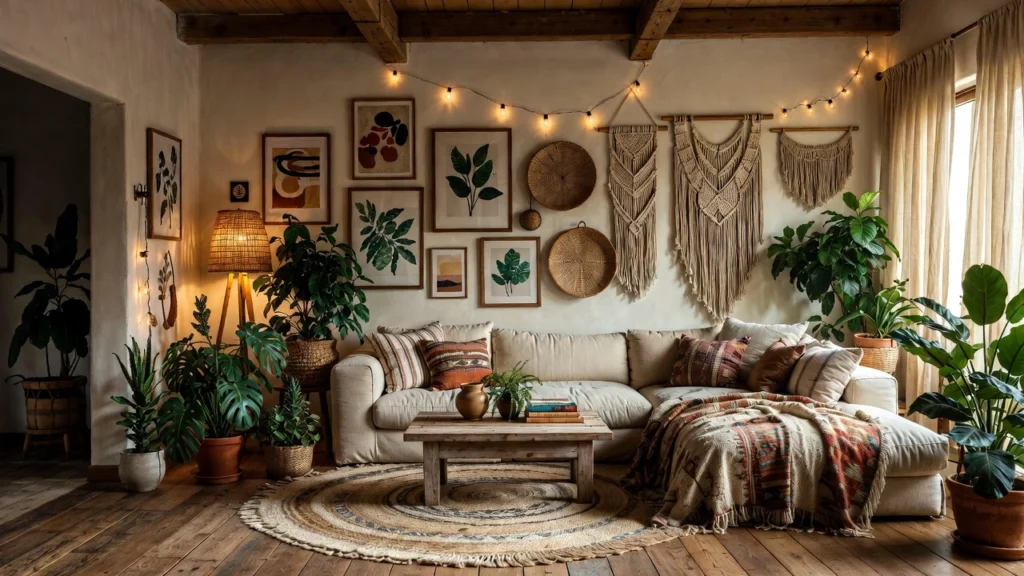
The morning sun filters through my macramé plant hanger, casting intricate shadows across the terracotta tiles while the scent of jasmine drifts from the windowsill garden. This isn’t just interior design—it’s a lifestyle that bridges the gap between my outdoor garden sanctuary and indoor living space. As someone who’s spent years cultivating both outdoor beds and indoor jungles, I’ve discovered that Boho Living Room Ideas offer the perfect canvas for gardeners who want to blur the lines between inside and out.
The bohemian aesthetic isn’t just about throwing some pillows around and calling it eclectic. When approached with a gardener’s eye, a bohemian living room becomes a living, breathing extension of your outdoor garden—complete with the textures, colors, and natural rhythms that make both spaces feel alive. After transforming countless homes (including my own) into plant-forward bohemian retreats, I’ve learned that the secret lies not in following trends, but in understanding how plants and natural elements can create the authentic, layered aesthetic that defines true boho style.
Creating Your Indoor Garden Foundation
The backbone of any successful plant-forward bohemian space starts with understanding light patterns the same way you’d study your outdoor garden beds. I spend at least a week observing how natural light moves through each room before placing a single plant or choosing furniture arrangements. South-facing windows become prime real estate for your statement plants—those dramatic fiddle leaf figs or towering bird of paradise that anchor the entire room’s energy.
But here’s where most people stumble: they focus on the Instagram-worthy plants and forget about the supporting cast. The real magic happens when you layer in medium and low-light plants that create depth and texture throughout the space. Snake plants tucked behind the sofa, pothos trailing from floating shelves, and clusters of ZZ plants in darker corners establish that lush, jungle-like foundation that makes bohemian spaces feel so inviting.
Working with Natural Light Cycles
Understanding your indoor light conditions requires the same attention you’d give to planning a perennial border. I use a simple light meter app on my phone to map out the brightest spots during different seasons, just like I do when designing outdoor garden layouts. This knowledge becomes crucial when selecting both plants and furniture placement.
The key is creating what I call “light zones”—areas where you group plants with similar light requirements while maintaining the relaxed, organic feel that defines boho style. Your brightest zone becomes home to flowering plants like African violets or orchids, while medium-light areas house your architectural plants like monstera or rubber trees that provide the bold, sculptural elements every bohemian room needs.
Building Texture Through Plant Selection
The bohemian aesthetic thrives on textural contrast, and plants offer an incredible palette of options. Smooth, waxy leaves of jade plants play beautifully against the soft, fuzzy texture of lamb’s ear or the dramatic, sword-like foliage of sansevieria. I always include at least one plant with interesting bark or stems—like a braided money tree or the twisted trunk of a desert rose—to add that organic architectural element that grounds the entire design.
Trailing plants deserve special mention in bohemian spaces. There’s something inherently free-spirited about cascading greenery that softens hard edges and creates natural room dividers. I’ve found that mixing different trailing varieties creates the most dynamic effect: combine the heart-shaped leaves of philodendron with the delicate tendrils of string of pearls and the broader leaves of pothos for a tapestry of textures that changes throughout the day as light shifts across them.
Mastering the Art of Layered Color Palettes
Color in a bohemian space should feel as organic and evolved as a cottage garden border that’s developed over years. The mistake I see repeatedly is people thinking boho means “anything goes” with color. In reality, the most successful bohemian interiors follow nature’s own color lessons—they build complexity through layering related tones rather than throwing random bright colors together.
Start with what I call your “earth base”—the warm terracotta, deep ochre, and rich brown tones that mirror soil and tree bark. These colors should appear in your larger furniture pieces and foundational textiles. Then layer in your “foliage greens”—not just the obvious emerald and forest greens, but the subtle sage, olive, and blue-greens that appear in plants like eucalyptus and succulents.
Incorporating Seasonal Color Shifts
Just as outdoor gardens change with the seasons, your indoor bohemian space should embrace subtle color evolution. I swap out accent pillows and throws to reflect what’s happening in my outdoor garden—deeper burgundies and golden yellows in fall, fresh citrus greens in spring, and rich jewel tones during winter months when I crave warmth and intensity.
The beauty of using plants as part of your color scheme is their natural seasonal variation. Many houseplants develop different colorations based on light exposure and seasonal cycles. My jade plant’s leaves deepen to burgundy-red edges in winter, while my pothos produces variegated new growth in spring that adds fresh green and cream tones to the room’s palette.
Balancing Bold Accents with Natural Neutrals
While earth tones and greens form the foundation, bohemian spaces need those unexpected pops of color that create visual interest and prevent the space from feeling too predictable. I draw inspiration from flower colors found in nature—the deep indigo of morning glories, the coral-pink of bougainvillea, or the golden yellow of black-eyed Susans.
These accent colors work best when introduced through smaller elements that can easily change: ceramic planters, throw pillows, artwork, or even the flowers of blooming houseplants. The key is using these bold colors sparingly and intentionally, allowing them to sing against the more subdued natural palette rather than competing for attention.
Incorporating Natural Materials and Textures
The tactile quality of a space makes or breaks the bohemian aesthetic, and as gardeners, we have an intuitive understanding of how different textures work together in nature. I source materials that tell a story of natural processes—weathered wood that shows its grain, stone that bears the marks of time, and fibers that reveal their organic origins.
Rattan and wicker furniture pieces bring immediate bohemian credibility while providing the perfect neutral backdrop for plant displays. But I’ve learned to look beyond the obvious choices. Reclaimed teak planters, hand-woven jute rugs, and vintage ceramic vessels add layers of texture while serving practical functions for plant care and display.
Creating Textural Contrast
The magic happens when smooth and rough textures play against each other. Pair the smooth ceramic of a modern planter with the rough-hewn surface of a live-edge wood plant stand. Balance the soft pile of a Moroccan rug with the clean lines of a marble-topped side table. These contrasts create visual interest and prevent the space from feeling flat or one-dimensional.
I pay special attention to how textures change throughout the day as light shifts across them. The nubby surface of a hand-woven throw catches afternoon light differently than morning sun, creating an ever-changing interplay of shadows and highlights that keeps the space feeling dynamic and alive.
Mixing Vintage and Contemporary Elements
Bohemian design celebrates the collected-over-time aesthetic, and plants provide the perfect bridge between vintage and contemporary elements. A mid-century modern planter looks right at home next to an antique brass vessel when both are filled with lush greenery. The plants themselves become the unifying element that makes diverse pieces feel cohesive rather than scattered.
I hunt for vintage plant stands, ceramic planters, and macramé hangers at estate sales and thrift shops, then pair them with contemporary furniture pieces. This mixing prevents the space from feeling like a museum display while maintaining that authentic, lived-in quality that defines true bohemian style.
Practical Tips for Long-Term Success
Maintaining a plant-forward bohemian living space requires the same attention to systems and routines that successful outdoor gardeners develop. I’ve learned that the most beautiful spaces are also the most functional—they support both the plants’ needs and daily living without creating ongoing stress or maintenance headaches.
Invest in proper drainage systems for all your planters, even if it means using slightly less attractive saucers or cache pots. Water damage to floors or furniture will quickly destroy the relaxed, carefree vibe you’re trying to create. I use a combination of gravel layers, activated charcoal, and proper potting mix in all my containers to prevent root rot and maintain healthy plants year-round.
Create watering stations that don’t disrupt the room’s aesthetic. A beautiful watering can becomes part of the decor when it’s made from hammered copper or ceramic. I keep plant care supplies in woven baskets tucked under plant stands or inside storage ottomans, making maintenance tasks feel less like chores and more like tending a beloved indoor garden.
Rotate your plants regularly to ensure even growth and prevent them from becoming lopsided as they reach toward light sources. This also gives you opportunities to refresh arrangements and try new plant combinations, keeping the space feeling dynamic and evolving rather than static.
Alternative Methods for Different Living Situations
Not every living situation allows for the full indoor jungle approach, but that doesn’t mean you can’t achieve the plant-forward bohemian aesthetic. I’ve helped apartment dwellers and frequent movers create beautiful spaces using alternative strategies that work within their constraints.
For renters who can’t make permanent changes, focus on portable elements that create maximum impact. Large floor plants in beautiful planters can define spaces and create natural room dividers without any structural changes. Tension rod systems allow for hanging plants without drilling holes, while plant stands on wheels make it easy to rearrange spaces for cleaning or seasonal changes.
Consider the “seasonal garden” approach if you have limited indoor space but access to outdoor areas like balconies or patios. Many tropical houseplants thrive outdoors during warm months, allowing you to create dramatic indoor displays in winter and expand to outdoor spaces during growing season. This approach also prevents plants from becoming root-bound and gives them the growth boost they get from natural outdoor conditions.
For those dealing with low light conditions, embrace the sculptural beauty of preserved and dried natural elements. Dried pampas grass, preserved eucalyptus branches, and collections of interesting driftwood or stone create botanical interest without requiring ongoing plant care. These elements work beautifully with the few low-light plants that will thrive in challenging conditions.
Conclusion
Creating a plant-forward bohemian living space is ultimately about understanding the same principles that make outdoor gardens successful: working with natural conditions, embracing seasonal change, and building complexity through thoughtful layering. The most successful Boho Living Room Ideas don’t fight against the natural characteristics of the space but enhance them through careful plant selection and organic material choices.
After years of helping people transform their homes into green sanctuaries, I’ve learned that the most beautiful spaces are those that feel like natural extensions of their owners’ personalities and lifestyles. A boho living room should never feel like you’re trying too hard or following someone else’s vision of what’s trendy.
The real reward comes months later when your plants have settled in, grown, and begun to shape the space with their own natural rhythms. When morning light filters through your hanging plants onto well-loved furniture pieces, when the subtle scent of herbs on your windowsill greets you each day, when friends comment on how peaceful and alive your space feels—that’s when you know you’ve successfully bridged the gap between your outdoor garden passion and indoor living space. Trust the process, embrace the imperfections, and let your space evolve naturally over time, just like the best gardens do.